Body
Strength, metabolism, vessels.
VO2 max, muscle, glucose, ApoB, blood pressure, sleep apnea, kidney, liver, cancer screening.

The point of biohacking in 2026
A healthy body with dementia is not a win. A sharp brain in a metabolically broken body is not a win. A long life spent anxious, inflamed, exhausted, and disconnected is not the prize either.
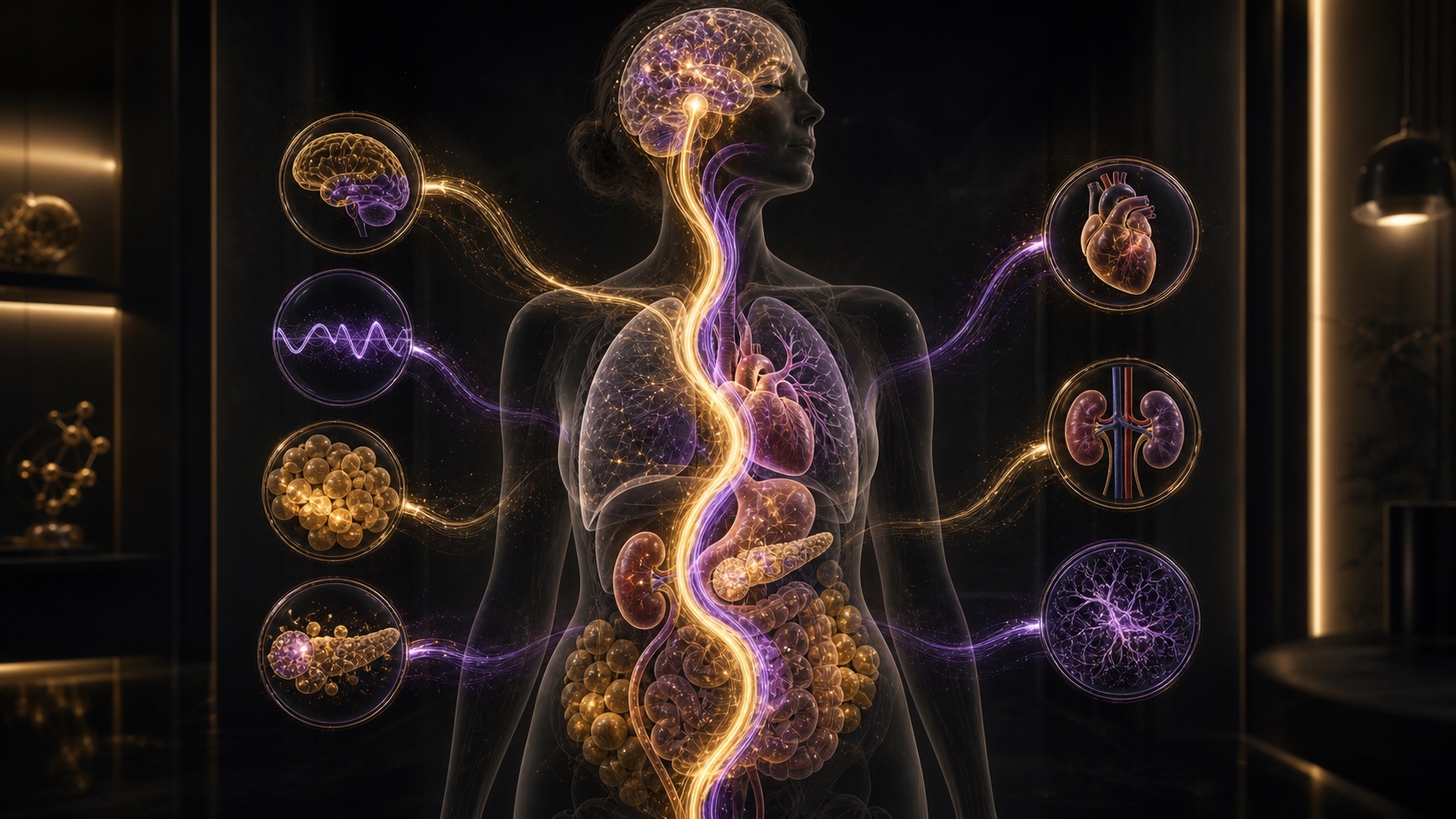
The operating system

One system. Three failure points.
5x
mortality spread between low and elite fitness
In 122,007 treadmill tests, low fitness carried roughly five times the adjusted mortality risk of elite fitness. Hard to ignore.
58%
less diabetes in the DPP lifestyle arm
The Diabetes Prevention Program used 7% weight loss and 150 minutes of activity per week. It beat placebo hard.
38%
lower HFpEF composite with tirzepatide
In SUMMIT, tirzepatide lowered the composite of CV death or worsening heart-failure events in obesity-related HFpEF. Mostly heart-failure events. Still serious.
25%
lower primary CV outcome in SPRINT
Blood pressure is not a background number. Intensive systolic control lowered the main cardiovascular outcome in high-risk adults.
01
The thesis
Brain, mind, and body have to stay online together.
02
The proof
Fitness, cardiometabolic risk, sleep, appetite biology, and cognition move real outcomes.
03
The bottleneck
The problem is usually not knowing what to do. It is finding what blocks execution.
04
The layer
Metabolic workup, therapy, sleep care, hormones, ADHD care, and GLP-1s can unlock the base layer.
05
The ask
Send the calculator result with phone, email, and insurance vs cash/private-pay.
The sharper frame
I see plenty of older adults with decent labs and a life they can no longer manage because memory, judgment, mood, sleep, or mobility fell apart. That is not longevity. That is a body outliving the operating system.
Body
Strength, metabolism, vessels.
VO2 max, muscle, glucose, ApoB, blood pressure, sleep apnea, kidney, liver, cancer screening.
Brain
Memory, attention, executive function.
Hearing, vision, vascular risk, sleep, inflammation, insulin resistance, depression, medication burden.
Mind
Mood, meaning, impulse control.
Anxiety, trauma, loneliness, alcohol, identity after work, and the ability to actually enjoy the extra time.
Why tirzepatide gets its own line
Tirzepatide has the strongest practical signal in the appetite-biology category right now. The cleanest human data is metabolic, heart-failure, sleep-apnea, kidney, and cardiovascular-risk data. The brain story is promising, but I would still label it early.
94%
Diabetes prevention signal
Randomized extension
Bigger reduction is better here. In the three-year SURMOUNT-1 prediabetes subgroup, tirzepatide cut progression to type 2 diabetes by 94% versus placebo.
38%
HFpEF and obesity
Randomized outcomes
Bigger reduction is better here. SUMMIT showed 38% lower relative risk for cardiovascular death or worsening heart-failure events in obesity-related HFpEF.
0.92
MACE versus dulaglutide
Active-comparator CVOT
Below 1.0 favors tirzepatide; 1.0 means no difference. A 0.92 hazard ratio supported noninferiority, not a clean superiority claim.
0.84
Cardiorenal composite
Post-hoc analysis
Below 1.0 is better here. A 0.84 hazard ratio points to fewer broad cardiorenal events, but this was post-hoc, so I treat it as signal.
OSA
Sleep apnea biology
Randomized trials
No single headline number here. Lower is better for apnea burden, hypoxic burden, inflammation, blood pressure, and body weight.
Brain
Neuroprotection signal
Preclinical plus observational
No clean human dementia-prevention number yet. I would call this promising biology, not proof that tirzepatide prevents dementia.
The clean claim
Exercise is not a wellness suggestion. It is a mortality intervention.
Blood pressure is not a boring primary-care number. LDL and ApoB are not abstract lipid trivia. Insulin resistance is not a cosmetic issue. These are the leaks that make a wealthy person old before they planned to be old.
The mistake is pretending these levers are separate. Much of what looks like a lifestyle problem can move only after the metabolic workup, therapy, sleep treatment, and targeted medical treatment are layered correctly.
Appetite medicine is not just weight loss when the patient has obesity, insulin resistance, fatty liver, sleep apnea, or cardiovascular risk. It is risk compression.
Testosterone is not a fountain of youth. Menopause hormone therapy is not a personality brand. In the right patient, hormones restore capacity. In the wrong patient, they become expensive noise.
And if we are not protecting cognition, mood, executive function, sleep, and social connection, we are just polishing the outside of the machine.
Foundation layer
Highest signal
Fitness, BP, ApoB, glucose, smoking, strength, food, sleep, alcohol.
This is where risk usually moves the most. But it is not isolated: metabolic workup, therapy, appetite treatment, ADHD treatment, pain control, hormones, and sleep apnea care can make this layer possible.
Clinical unlockers
High leverage
Tirzepatide/GLP-1, hormones, sleep apnea, ADHD care, screening, deprescribing.
These are not bonus points. They matter when they remove the bottleneck keeping someone from training, eating sanely, sleeping, doing therapy, thinking clearly, or staying consistent.
Experimental layer
Interesting. Sometimes useful. Weak if it distracts from untreated risk.
The small bars are the experimental slice. I like curiosity, but I do not let it outrank blood pressure, ApoB, sleep oxygen, executive function, or strength.
The argument
The best work changes the constraint. It buys capacity, lowers real risk, or gives the next decade more usable body.
The first constraint
The point is staying cognitively, emotionally, and physically capable long enough to use what you built.
The strongest signal
Fitness is one of the few levers with a mortality signal strong enough to make almost every other intervention look secondary.
The appetite shift
Dual GIP and GLP-1 signaling has weight, diabetes-prevention, heart-failure, sleep-apnea, kidney, and emerging brain-biology reasons to take it seriously.
The hormone line
Testosterone and menopause hormone therapy belong in the plan when symptoms, labs, timing, and risk make sense. Not as a rich-person placebo.
The ethical filter
A healthy body with a collapsing brain is not a win. A sharp brain inside a metabolically broken body is not a win either.
High-yield menu
These are the moves I would keep in the room for a serious 40+ person with money, risk, and limited time.
Appetite biology
Visceral fat, insulin resistance, sleep apnea, HFpEF, diabetes prevention.
Capacity restoration
Muscle, libido, mood, bone, anemia, menopause symptoms when the indication is real.
Bottleneck removal
Vitamin D, iron/ferritin, B12, magnesium, omega-3, thyroid when labs and symptoms match.
Execution layer
For diagnosed ADHD. The value is follow-through, impulse control, initiation, and adherence.
heart / kidney
Not for everyone. High-value when diabetes, CKD, or heart-failure biology is present.
artery time
Statin, ezetimibe, PCSK9, or inclisiran when risk earns the intensity.
brain input
Cognitive protection gets harder when the brain is starved of signal.
night risk
Sleep apnea quietly taxes blood pressure, mood, insulin, testosterone, and memory.
selected cases
Low-dose colchicine belongs in cardiology-level risk selection, not casual biohacking.
#1 · Human outcomes
Mortality signal
Cardiorespiratory fitness is the first lever I would fund. VO2 max testing, coaching, zone 2 work, intervals, and repeat measurement beat almost any exotic protocol.
#2 · Human outcomes
Falls, glucose, reserve
Muscle is glucose storage, fall prevention, medication tolerance, and metabolic reserve. Strength training is not vanity after forty-five.
#3 · Human outcomes
Metabolic and CV risk compression
Tirzepatide has the stronger weight-loss and diabetes-prevention signal, HFpEF outcome data, and a head-to-head CVOT showing noninferiority to dulaglutide with broader metabolic and cardiorenal signals. The neuroprotective story is still early: animal data and GLP-1 class signals, not a proven human brain outcome.
#4 · Human outcomes
Heart, brain, kidney
SPRINT is why I do not shrug at elevated systolic pressure in the right patient. The brain, kidney, and vascular system pay the bill.
#5 · Human outcomes
Atherosclerosis risk
Statins, ezetimibe, PCSK9 drugs, nutrition, and weight loss are not morally interesting. They lower atherosclerotic risk.
#6 · Human outcomes
Diabetes prevention
The DPP is why I care about waist, A1c, fasting insulin, triglycerides, and activity before the diagnosis becomes diabetes.
#7 · Human outcomes
Heart and kidney protection
SGLT2 inhibitors are not longevity drugs for everyone. In heart failure, CKD, or diabetes risk patterns, they have real outcome data for heart-failure and kidney protection.
#8 · Human outcomes
CV and metabolic risk
Mediterranean-style eating has outcome data. Enough protein keeps muscle. Enough fiber and plants move cardiometabolic risk. Enough restraint keeps visceral fat from running the meeting.
#9 · Human outcomes
Decade-scale risk
This is not glamorous. It still beats most expensive biohacks by a mile.
#10 · Strong clinical logic
Oxygen, BP, mood
If oxygen drops all night, your morning cortisol and blood pressure are not mysterious.
#11 · Human outcomes
Recovery architecture
Sleep is where appetite, insulin sensitivity, testosterone, mood, and blood pressure all negotiate.
#12 · Strong clinical logic
Capacity restoration
Testosterone can matter for libido, muscle, mood, anemia, and function in deficient patients. Menopause hormone therapy can matter for the right symptomatic woman near menopause. I do not sell either as lifespan magic.
#13 · Strong clinical logic
Energy, mood, bone, muscle
Vitamin D, iron/ferritin, B12, magnesium, omega-3, and thyroid status are not sexy. They are cheap compared with trying to outperform a deficiency.
#14 · Human outcomes
Execution and adherence
Dexmethylphenidate is not a longevity stimulant. In a properly diagnosed adult with ADHD, it can make the rest of the plan executable. Where dex-specific data is thin, I borrow from the broader methylphenidate-family adult ADHD evidence and stay honest about that.
#15 · Human outcomes
Time saved by early detection
Colonoscopy, mammography when indicated, cervical screening, skin checks, and lung screening for the right smoking history are boring until they save decades.
#16 · Human outcomes
Adherence and stress load
A body stuck in threat physiology does not recover well. Mental health is part of longevity, not a separate category.
#17 · Human outcomes
Decision quality
Hearing, blood pressure, exercise, diabetes, depression, sleep, alcohol, and social isolation all touch dementia risk. Cognitive decline is not just memory. It is losing the ability to manage your own life.
#18 · Human outcomes
Cognitive reserve
The last five years made sensory loss harder to dismiss. Hearing aids slowed cognitive decline in a high-risk older subgroup, and vision loss keeps showing up in dementia-risk models.
#19 · Strong clinical logic
Less drag
Polypharmacy steals balance, cognition, sleep architecture, libido, and motivation. Sometimes longevity starts by removing what should not be there.
#20 · Strong clinical logic
Better targeting
ApoB, Lp(a), A1c, fasting insulin, hs-CRP, ferritin, thyroid, sex hormones, liver markers, kidney markers, VO2 max, DEXA. I like data when it changes decisions.
#21 · Human outcomes
Secondary CV prevention
Low-dose colchicine has coronary-disease outcome data, but the 2024 acute-MI trial was neutral. This belongs in cardiology-level risk selection, not casual biohacking.
#22 · Emerging
Possible aging biology
CALERIE and DO-HEALTH make aging biology worth watching. Rapamycin, metformin for non-diabetics, NAD boosters, senolytics, sauna, and cold exposure do not beat untreated hypertension.
The stack I would defend
The common longevity stack stops at exercise, sleep, protein, sauna, and supplements. I care about those. I just don't think they are enough for the person whose appetite biology, hormones, attention, blood pressure, ApoB, or sleep oxygen are already off.

Capacity
Appetite biology
Tirzepatide
Capacity restoration
Testosterone / hormones
Bottleneck removal
Targeted repletion
Execution layer
Dexmethylphenidate
Ethics
Ethical biohacking starts with diagnosis. What is the patient’s actual risk? What is already broken? What intervention changes the next decade?
I care less about novelty than leverage.
If someone has untreated sleep apnea, visceral obesity, hypertension, low testosterone from a real endocrine pattern, depression that keeps them inactive, and a family history of early heart disease, the plan is obvious. Expensive can be justified. Random cannot.
What I would say at dinner
“The question is not whether biohacking is good or bad. The question is whether the intervention earns its place.”
Does it reduce a real risk?
Does it improve function?
Does it make the next intervention more possible?
Does it respect the person’s mental health, or does it turn them into a full-time biomarker manager?
Sources I would bring into the room
Cardiorespiratory fitness and all-cause mortality
JAMA Network Open
Intensive blood pressure control in high-risk adults
SPRINT / New England Journal of Medicine
LDL lowering and major vascular events
Cholesterol Treatment Trialists / Lancet
Mediterranean diet and cardiovascular events
PREDIMED / New England Journal of Medicine
Diabetes Prevention Program, lifestyle vs metformin
New England Journal of Medicine
CALERIE, calorie restriction and DunedinPACE
Nature Aging
Semaglutide and cardiovascular outcomes in obesity
New England Journal of Medicine
Tirzepatide, obesity, and diabetes prevention
SURMOUNT-1 three-year extension
Tirzepatide in obesity-related HFpEF
SUMMIT / New England Journal of Medicine
Tirzepatide cardiovascular outcomes versus dulaglutide
SURPASS-CVOT
Tirzepatide for obesity-related obstructive sleep apnea
SURMOUNT-OSA / New England Journal of Medicine
GLP-1 receptor agonists across 175 health outcomes
Nature Medicine 2025
SGLT2 inhibition in chronic kidney disease
DAPA-CKD / New England Journal of Medicine
Hearing intervention and cognitive decline
ACHIEVE / Lancet
Low-dose colchicine in chronic coronary disease
LoDoCo2 / New England Journal of Medicine
Vitamin D, omega-3, exercise, and epigenetic clocks
DO-HEALTH / Nature Aging
Testosterone cardiovascular safety in hypogonadal men
New England Journal of Medicine
Hormone therapy timing and risk framing
The Menopause Society position statement
Dexmethylphenidate extended-release adult ADHD trial data
DailyMed prescribing information
Extended-release methylphenidate in adults with ADHD
Cochrane Review 2022
Dementia prevention and modifiable risk factors
Lancet Commission 2024
These sources support the direction of travel. They do not prove that one person can buy a specific number of years. I would not trust anyone who says they can.
Clinical menu
I will still ask the same question. What changes the next ten years enough to be worth doing?
SF diagnostic optimization
Private-pay diagnostic pathway for San Francisco patients whose performance, mood, sleep, and medical signals overlap.
Open page
Diagnostic evaluation
The starting point when symptoms, labs, medications, sleep, and risk need to be sorted.
Open page
Labs Before Meds
The method: investigate the body before guessing at the brain.
Open page
Services menu
ADHD, anxiety, depression, medication management, and location-specific care.
Open page
Supplements
Evidence-aware repletion and supplement strategy without wellness noise.
Open page
Capacity gap calculator
This is not a lifespan prediction. It is an executive-level model: current operating capacity, optimized operating capacity, and the gap that might be closed with real treatment adherence.
01 / Age context
Compounding wealth meets compounding biology
At 50+, predictions get more useful because blood pressure, ApoB, visceral fat, menopause or testosterone patterns, sleep apnea, and insulin resistance are usually visible.
02 / Professional read
Current operating capacity
73
Today’s friction
Optimized capacity
98
If the plan is executed
+25
capacity gap
0.34x
pace relief
+4
usable decade
Readout: large gap closed. Current reserve is where the model places you now. Optimized reserve estimates what improves if selected risks are addressed and the plan is actually followed.
Higher reserve is better. Lower aging pace pressure is better. The gap is directional, not a medical promise.
Likely bottlenecks
The intervention matters less than matching it to the constraint.
This only swaps the hormone-related prompt. It is not a full sex-specific risk model.
04 / Conditions that move the needle
Tap what is actually in the room. The weights are a dinner-demo heuristic for reserve loss, not a diagnostic score.
2 selected
05 / Which bottleneck would we treat first?