
Women's Mental Health
Mood, hormones, libido, sleep, and medication side effects overlap.
Best fit when mood, anxiety, sleep, libido, cycle pattern, hormone shifts, and medication side effects need to be read together.
Two weeks a month she was fine.
Ten days a month she wanted to disappear.
That pattern matters. Not because PMDD is mild. PMDD can be brutal. It matters because the medication logic changes when symptoms are cycle-locked instead of episode-based.
I do not diagnose mood disorders from intensity alone.
I diagnose from pattern.
The Fast Answer
- PMDD requires timing, not just severe symptoms.
- Bipolar disorder requires mania or hypomania history, not just premenstrual rage.
- Prospective daily tracking for at least two cycles often changes the diagnosis.
- Suicidal thoughts before a period are still suicidal thoughts.
- Antidepressant escalation without bipolar screening can be risky.
Not every article needs an appointment. Use this page for research. Turn it into a visit when the pattern is affecting a real medication, diagnosis, or daily-function decision.
Turn this into a visit when
- Mood, anxiety, focus, sleep, libido, or medication sensitivity changed with timing.
- Cycle, postpartum, perimenopause, or hormone shifts seem connected to symptoms.
- The old psychiatric label does not explain the body pattern.
Bring this pattern
Available for appropriate patients in California and Arizona.
PMDD Has A Clock
PMDD symptoms show up in the luteal phase, the stretch after ovulation and before bleeding. They improve after menses starts. The pattern repeats and causes real impairment.
That timing is not decorative.
It is diagnostic.
Mood swings, rage, anxiety, depression, insomnia, rejection sensitivity, food cravings, physical symptoms, and suicidal thoughts can happen. But if nobody tracks cycle day, the patient gets labeled dramatic, depressed, borderline, bipolar, or "hormonal" without a diagnosis.
I want the calendar.
Bipolar Has Episodes
Bipolar disorder is not just mood swings.
I look for episodes of mania or hypomania. Decreased need for sleep. Elevated or irritable mood with a shift in function. Racing thoughts. Pressured speech. Risk-taking. Grandiosity. Impulsivity. Psychosis in some cases. Symptoms that are not limited to the premenstrual window.
Premenstrual rage can look scary.
That does not automatically make it bipolar disorder.
And bipolar disorder can worsen premenstrually, which is why clean categories can fail.

Before you keep searching
If this answer changes what you might do next, pick the next clinical question now.
The Overlap Is Real
Both PMDD and bipolar disorder can involve irritability, insomnia, depression, impulsivity, agitation, and suicidal thoughts.
That overlap is exactly why guessing is dangerous.
The question is not "How intense is it?"
The question is when it happens, how long it lasts, whether there are symptom-free intervals, whether sleep need changes, whether risky behavior appears, and whether the symptoms are locked to the cycle.
I do not trust memory alone for this.
Patients are usually trying to survive the month, not build a research dataset.
Track It Prospectively
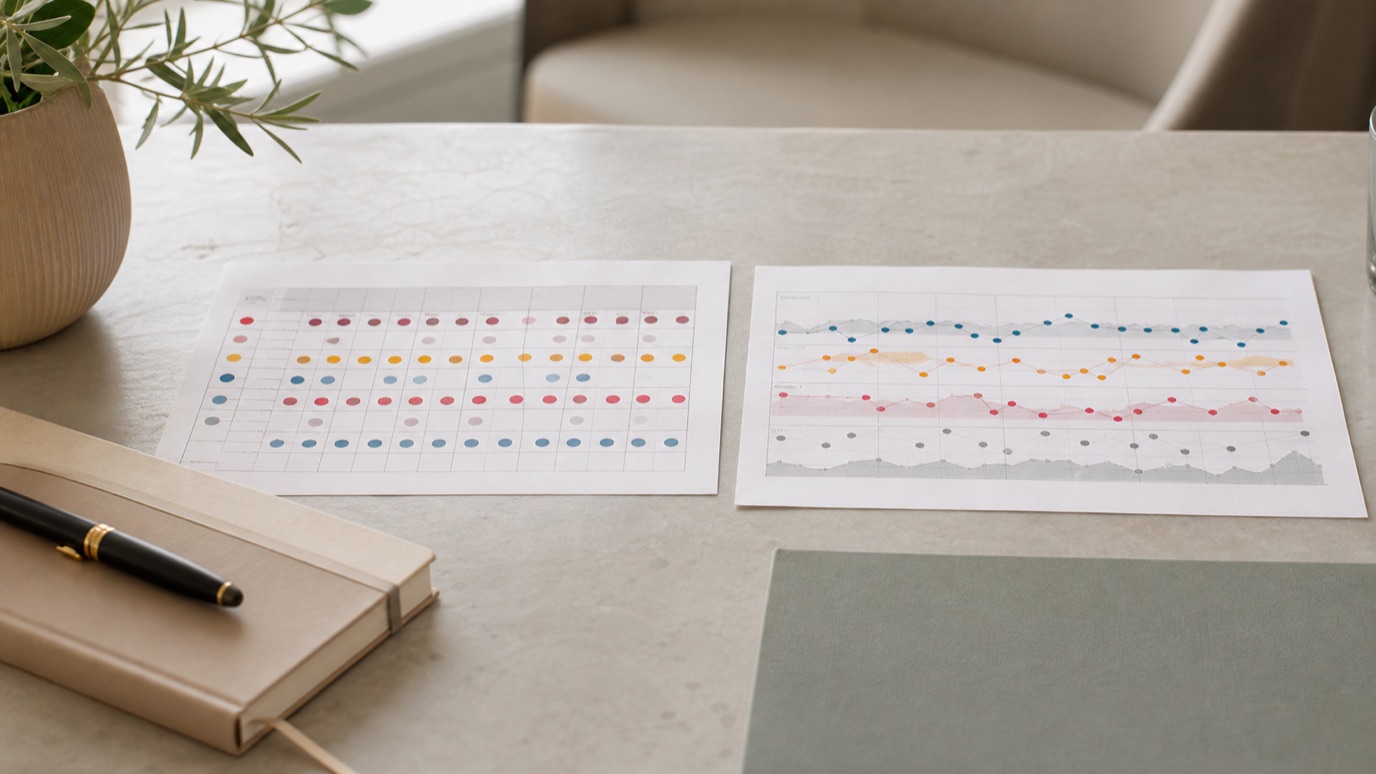
Prospective tracking means recording symptoms daily before deciding what the pattern was. ACOG's premenstrual disorder guidance supports symptom tracking as part of diagnosis and management.
I want at least two cycles when possible.
Track mood, irritability, anxiety, sleep, suicidal thoughts, bleeding, ovulation clues if known, medications, alcohol, cannabis, stimulant use, and major stressors.
Do not track perfectly.
Track honestly.
Treatment Logic Changes
PMDD treatment may include SSRIs, sometimes continuous and sometimes luteal-phase dosing, hormonal strategies, therapy, lifestyle supports, and OBGYN collaboration.
Bipolar treatment uses a different logic. Mood stabilization matters. Antidepressant-only approaches can worsen cycling or activation in some patients with bipolar disorder.
That is why I screen before escalating.
Not because I am trying to make the visit harder.
Because the wrong diagnosis can make the next month worse.
Suicide Risk Is Not Less Serious Because It Is Cyclic
This is the section I care about most.
If suicidal thoughts show up before the period every month, they are not less dangerous because they are predictable. Predictable risk is still risk.
PMDD has been linked with suicidal ideation and attempts in the literature. I do not need the statistic in front of me to take it seriously. If a patient says, "I only want to die the week before my period," I hear the word die.
The calendar does not make it safe.
What To Bring
Bring two months of daily notes if you have them.
Cycle day. Bleeding. Mood. Sleep. Rage. panic. Suicidal thoughts. Risk-taking. Spending. Sex drive shifts. Substance use. Medication changes. Family history of bipolar disorder. Prior postpartum mood symptoms. Prior antidepressant activation.
If you do not have tracking, start now.
The next diagnosis may depend on it.
Common Questions
How can I tell PMDD from bipolar disorder?
Timing. PMDD locks to the luteal phase — symptoms build after ovulation and lift once bleeding starts. Bipolar disorder runs in episodes that ignore the calendar, and it requires a history of mania or hypomania, not just premenstrual rage. I want at least two months of daily tracking before trusting either label.
Can PMDD cause suicidal thoughts?
Yes, and being predictable doesn't make them safer. PMDD has been linked with suicidal ideation and attempts (PMID: 34488087). If the thoughts arrive before your period every month, that's still a safety conversation. In a crisis, call or text 988.
Why does getting this diagnosis right change the medication?
PMDD can respond to SSRIs, sometimes dosed only during the luteal phase — the two weeks before a period. Bipolar disorder needs mood stabilization first — antidepressants alone can worsen cycling or activation in some patients. The wrong label can make the next month worse, which is why I screen for bipolar disorder before escalating anything.
Medical Disclaimer: This article is for education only and is not medical advice. PMDD, bipolar disorder, suicidal thoughts, antidepressants, mood stabilizers, hormones, sleep disruption, and psychiatric risk require individualized evaluation. Do not start, stop, taper, combine, or change psychiatric medications, hormones, supplements, or contraception without guidance from qualified clinicians. Seek urgent help for suicidal thoughts, self-harm urges, mania, psychosis, severe agitation, not sleeping for days, dangerous impulsivity, or feeling unable to stay safe. In a mental health crisis, call or text 988 or go to the nearest emergency room.
References
- ACOG Clinical Practice Guideline No. 7. Management of Premenstrual Disorders. 2023. https://www.acog.org/clinical/clinical-guidance/clinical-practice-guideline/articles/2023/12/management-of-premenstrual-disorders
- ACOG guideline PubMed record. PMID: 37973069.
- Yan H, Ding Y, Guo W. Suicidality in patients with premenstrual dysphoric disorder — a systematic review and meta-analysis. Journal of Affective Disorders. 2021. DOI: 10.1016/j.jad.2021.08.082. PMID: 34488087.
- PMDD and suicidal ideation study. PMID: 35148753.
- Clinical correlates of premenstrual suicidal ideation. PMID: 36348456.
Where to take this next
Care that picks up where the reading stops
Written by
Canybec Sulayman APRN, PMHNP-BC, CCRN-CSC
Investigating the root causes of mental health symptoms with 19 years of ICU diagnostic rigor.
Want a plan that fits the whole picture?
Bring the symptoms, medication history, labs, sleep pattern, and questions. The goal is a clearer explanation and safer next step.