City Minds — Cupertino, California
The Cupertino Mind
The highest-earning large city in America, with the lowest distress estimates on this list — sitting right beside one of the highest gaps in social and emotional support.

The short version
Cupertino went from orchards to Apple Park in two generations and is now the top-earning large city in the United States, with an intense, decorated, competitive achievement culture.
Its depression, distress, and drinking estimates are the lowest in this 23-city series — beside one of the highest gaps in social and emotional support. That pairing can mean a genuinely calm place, or a high-achieving, low-disclosure one where struggle goes unsaid.
Averages can’t tell those apart; a clinician can. Dual-trained in psychiatry and primary care, 19 years reading labs in intensive care. Bring your panel. Telehealth across California.
Cupertino, by the numbers
Each bar shows where Cupertino lands among the 23 California and Arizona cities in this series. The vertical tick is the group median; the dot is Cupertino. These are CDC model-based estimates for adults, not head counts.
- Depression
- 14.4%
- Frequent mental distress
- 10.4%
- Loneliness
- 35.8%
- Lacking social & emotional support
- 26.8%
- Insufficient sleep
- 29.6%
- Binge drinking
- 10.6%
adults ever told they have a depressive disorder
14+ days of poor mental health in the past month
adults who report feeling lonely
adults who lack the social and emotional support they need
adults sleeping less than 7 hours a night
adults reporting binge drinking in the past 30 days
Source: CDC PLACES, 2025 release (model-based estimates). Figures are small-area modeled estimates for adults aged 18+, retrieved 2026-07-03. The 23-city median is calculated across the cities in this series, not a national benchmark.
Reading numbers like these against how you actually feel — that’s the appointment. Telehealth across California.
Orchards to spaceship

Within roughly two generations, the same municipal footprint went from the cherry-and-apricot orchards of the "Valley of Heart’s Delight" to the headquarters of the most valuable company on earth. Apple’s Infinite Loop campus opened in 1993; Apple Park, the circular "spaceship," opened to employees in 2017, built partly on former orchard and Hewlett-Packard land, at a cost of about $5 billion.
A place that transforms this completely, this fast, tends to prize one thing above almost all others: visible, measurable achievement. That value shapes the childhoods raised here and the adults they become.
Sources: Apple Park (Wikipedia),Cupertino median income — #1 US large city.
A culture of visible success

Cupertino is the highest-earning large city in the entire United States, with a median household income around $231,000, roughly 82% of adults holding a bachelor’s degree, and a majority of residents born abroad. Its schools are nationally decorated and fiercely competitive, ringed by a dense industry of test-prep and admissions consulting.
Local student journalism and reporting describe a phenomenon called "Duck Syndrome" — gliding along the surface while paddling furiously underneath — and a "competitive isolation" where people hide their struggles to protect an edge. That is culture, not diagnosis. But it sets up exactly the pattern the numbers show next.
Sources: Daily Californian — Silicon Valley academic culture.
The lowest distress, and the quietest

Here the data does something genuinely interesting. Cupertino carries the lowest modeled estimates for depression, for frequent mental distress, and for binge drinking of all 23 cities in this series. On the surface metrics, it looks like the healthiest city on the list — and that may be partly real.
But sitting right beside those low numbers is one of the highest estimates in the set for lacking social and emotional support. A city that reports very little distress and very little support at the same time is worth reading carefully: it can describe a genuinely calm place, or a high-achieving, low-disclosure culture where struggle exists and simply doesn’t get said out loud. The averages can’t tell those apart. A clinician, with one person in the room, can.
Sources: CDC PLACES, 2025 release.
When the struggle stays unsaid
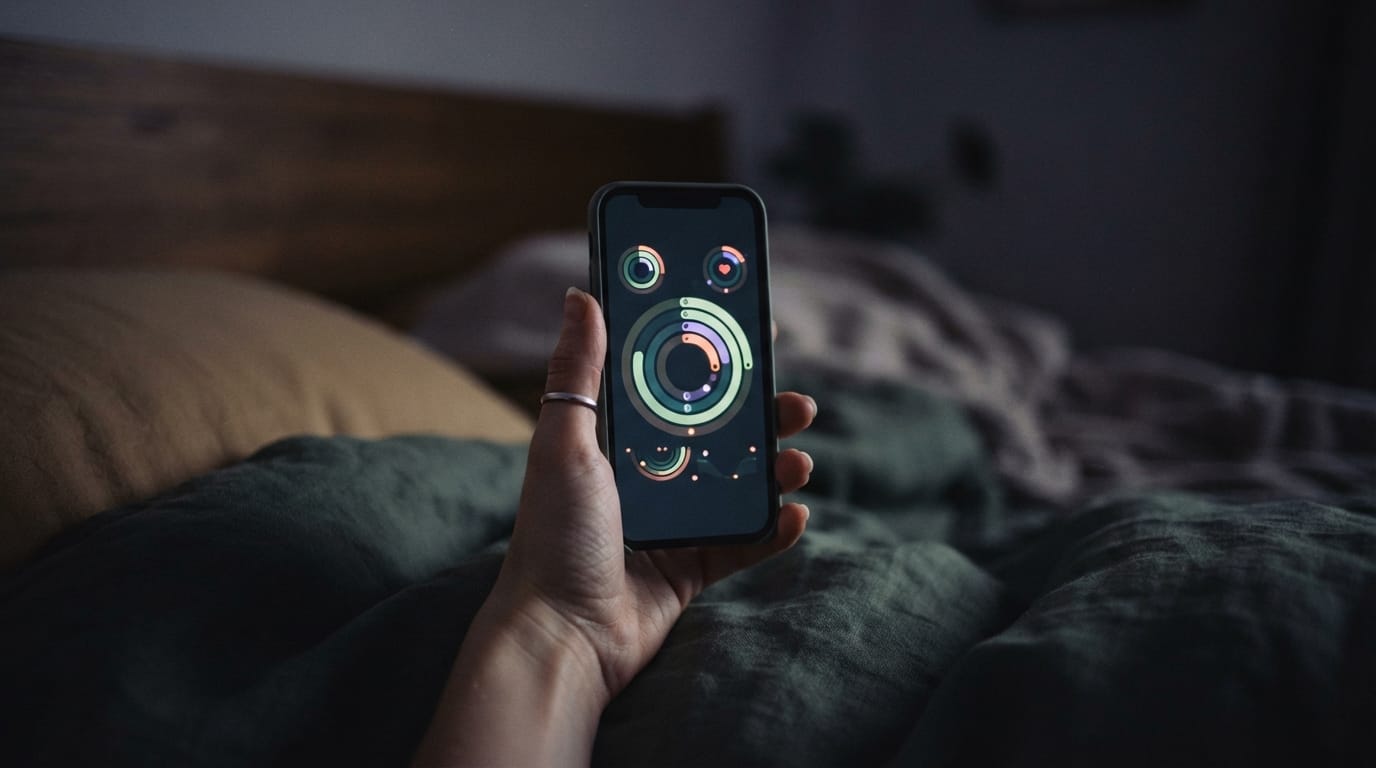
For someone raised or living in a place that rewards the appearance of effortless success, the risk is not that problems don’t exist — it’s that they get managed privately, optimized around, and never named to anyone who could actually help. The self-tracking loop fits that instinct perfectly: it feels like doing something, alone, at night, without having to say anything is wrong.
The interruption to that pattern is a setting where the whole picture — labs, history, and how you actually feel — can be read by someone whose job is exactly that, with no performance required.
Bring the panel

High-functioning is not the same as low-need, and a good ZIP code doesn’t make symptoms go away. If you have been managing something quietly, the missing step is a clinician who will take your data and your history seriously and tell you plainly what is worth treating.
That is the work here: dual-trained in psychiatry and primary care, after 19 years reading lab values in intensive care. Bring your panel. Telehealth across California.
If you already have the labs, this is the part nobody does
A lot of people in Cupertino arrive with data — a full panel, a dashboard, a subscription that flagged three markers orange — and no one who will sit down and read it against how they actually feel. That reading is the work. I trained in psychiatry first, then went back and trained in adult-gerontology primary care, after 19 years in intensive care units at USC, Cedars-Sinai, and NewYork-Presbyterian, where the labs were never optional. Bring the panel. We will go through it, decide what matters, treat what should be treated, and let the rest go.
Telehealth across California. Mental health is not only psychiatry — sometimes it is a body that has not been properly investigated, and telling those apart is the whole job.
What happens next
- 1. A free 15-minute call to see whether this is the right fit — no commitment, real availability on the calendar.
- 2. Bring whatever labs you already have — a full panel, a dashboard, or nothing yet. We start from where you are.
- 3. We read it together, decide what matters, and build the plan from there. Most new patients are seen within days.
Horizon Peak Health is verified on Psychology Today.
Bring your panel. Let's read it together.
Start with a free 15-minute call to see if we're a fit — telehealth across california. Most new patients are seen within days.
This page is education, not crisis care. If you are in danger right now, call 911, or call or text 988 for the Suicide & Crisis Lifeline, any hour.