City Minds — Mill Valley, California
The Mill Valley Mind
The town that helped invent the wellness movement, with the strongest social support on this entire list — and depression that shows up anyway.

The short version
Mill Valley helped invent modern wellness — the first US wellness center opened here in 1975 — and sits in one of California’s richest, longest-lived counties, wrapped in redwoods and community.
It has the lowest emotional-support gap and one of the lowest loneliness estimates in this 23-city series. And still, roughly one in five adults carries depression. Connection and wellness culture are not a cure for a clinical condition.
When you’ve done everything right and still feel off, the missing layer is a diagnosis. Dual-trained in psychiatry and primary care, 19 years reading labs in intensive care. Bring your panel. Telehealth across California.
Mill Valley, by the numbers
Each bar shows where Mill Valley lands among the 23 California and Arizona cities in this series. The vertical tick is the group median; the dot is Mill Valley. These are CDC model-based estimates for adults, not head counts.
- Depression
- 20.9%
- Frequent mental distress
- 12.9%
- Loneliness
- 27.3%
- Lacking social & emotional support
- 18.8%
- Insufficient sleep
- 28.5%
- Binge drinking
- 15.6%
adults ever told they have a depressive disorder
14+ days of poor mental health in the past month
adults who report feeling lonely
adults who lack the social and emotional support they need
adults sleeping less than 7 hours a night
adults reporting binge drinking in the past 30 days
Source: CDC PLACES, 2025 release (model-based estimates). Figures are small-area modeled estimates for adults aged 18+, retrieved 2026-07-03. The 23-city median is calculated across the cities in this series, not a national benchmark.
Reading numbers like these against how you actually feel — that’s the appointment. Telehealth across California.
The town that helped invent wellness

In 1975, Dr. John Travis opened what is generally considered the first wellness center in the United States right here, building the "illness–wellness continuum" that shaped how a whole culture came to think about health. A few ridgelines away on Mount Tamalpais, mountain biking was invented in the same decade. Muir Woods, just up the road, was the first national monument created from privately donated land, in 1908.
This is where a lot of what today’s optimizer takes for granted began. If any place had the tools to be well, it is this one.
Sources: John Travis, wellness pioneer (Wikipedia),Muir Woods National Monument (Wikipedia).
Wealth, nature, and connection — the full stack
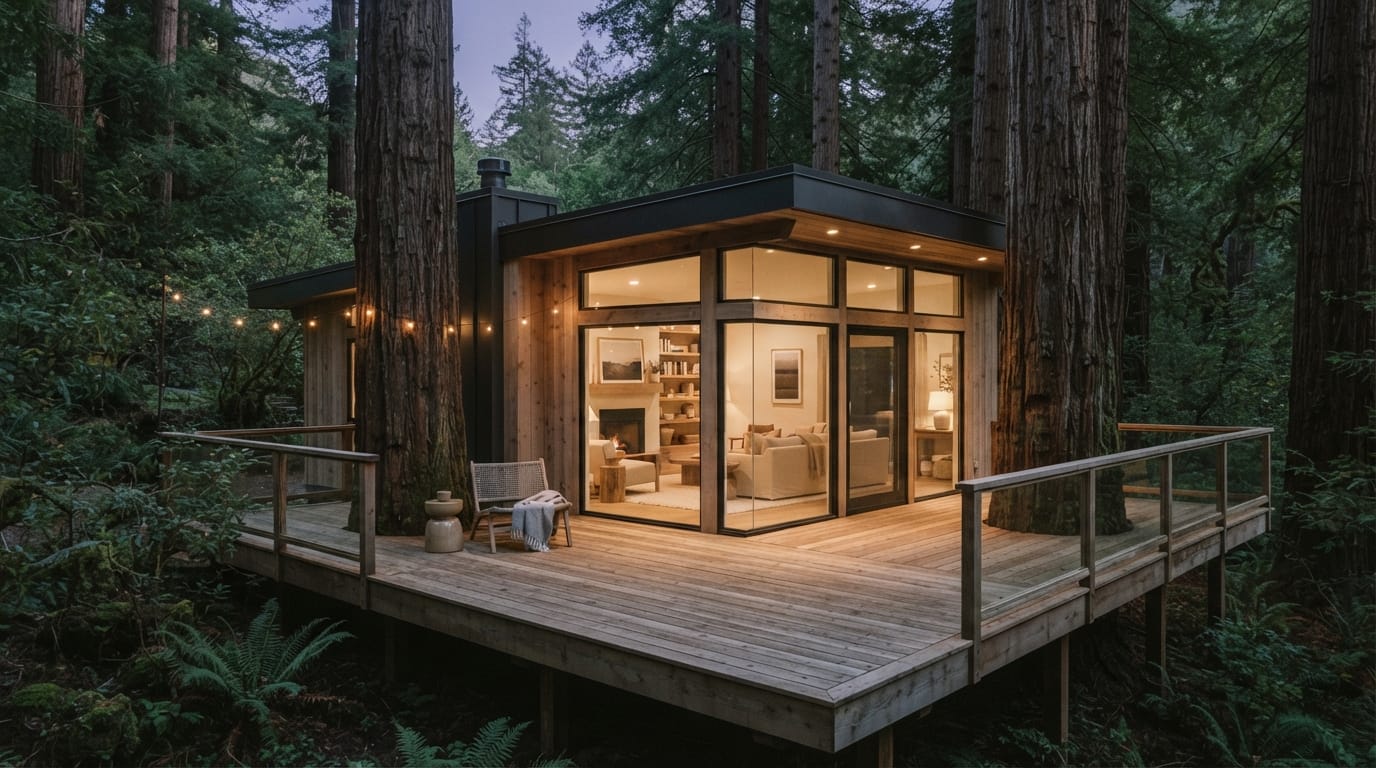
Mill Valley sits in Marin, among the wealthiest counties in California, with a median household income above $200,000 and roughly three in four adults holding a bachelor’s degree. It has redwoods, trails, organic everything, and — as the data will show — unusually strong social connection. Marin also posts the second-highest life expectancy of any California county, nearly five years above the state average.
By every input the wellness world says matters — money, nature, community, longevity — this town has done it right. Which is exactly what makes its mental-health numbers instructive.
Sources: Marin life expectancy (Stacker),Marin health paradox (MyMarinHealth).
Best-supported, and still struggling

Of the 23 cities in this series, Mill Valley has the lowest estimate for lacking social and emotional support, and one of the lowest for loneliness. On the two measures public-health messaging says protect you most, this town is the best on the list. And yet its modeled depression estimate sits right in the middle of the group — roughly one in five adults.
This is the cleanest possible refutation of the idea that connection and wellness culture are a cure for a clinical condition. Depression here is not primarily a social-deficit problem, which means social fixes — more community, more nature, more optimization — won’t close it. County data underlines the point: Marin, one of the healthiest counties in California, also reports a suicide rate well above the state’s and higher daily use of psychiatric medication. Living longest is not the same as living well.
Sources: CDC PLACES, 2025 release.
When you’ve already done everything right
The hardest version of this to sit with is the person who did everything the culture prescribed — the community, the clean inputs, the biomarker panels, the mindfulness — and is still, quietly, not well. When you have optimized every environmental variable and the feeling persists, the temptation is to conclude you must be doing wellness wrong, and to optimize harder.
Usually that is not the answer. The answer is a clinical read: is this a mood disorder that needs treatment, a medical contributor hiding in your labs, or an anxiety being fed by the endless optimizing itself? Telling those apart is the work.
Bring the panel

If you have the community and the nature and the clean inputs and still feel off, you are not doing wellness wrong. You may simply need the layer wellness never included — a diagnostic read of your labs, your history, and your symptoms, together.
That is the work here: dual-trained in psychiatry and primary care, after 19 years reading lab values in intensive care. Bring your panel. Telehealth across California.
If you already have the labs, this is the part nobody does
A lot of people in Mill Valley arrive with data — a full panel, a dashboard, a subscription that flagged three markers orange — and no one who will sit down and read it against how they actually feel. That reading is the work. I trained in psychiatry first, then went back and trained in adult-gerontology primary care, after 19 years in intensive care units at USC, Cedars-Sinai, and NewYork-Presbyterian, where the labs were never optional. Bring the panel. We will go through it, decide what matters, treat what should be treated, and let the rest go.
Telehealth across California. Mental health is not only psychiatry — sometimes it is a body that has not been properly investigated, and telling those apart is the whole job.
What happens next
- 1. A free 15-minute call to see whether this is the right fit — no commitment, real availability on the calendar.
- 2. Bring whatever labs you already have — a full panel, a dashboard, or nothing yet. We start from where you are.
- 3. We read it together, decide what matters, and build the plan from there. Most new patients are seen within days.
Horizon Peak Health is verified on Psychology Today.
Bring your panel. Let's read it together.
Start with a free 15-minute call to see if we're a fit — telehealth across california. Most new patients are seen within days.
This page is education, not crisis care. If you are in danger right now, call 911, or call or text 988 for the Suicide & Crisis Lifeline, any hour.