City Minds — Mountain View, California
The Mountain View Mind
The city that put the silicon in Silicon Valley and hosted the first Quantified Self conference — a place built to measure everything, reporting one of the higher loneliness estimates on this list.

The short version
Mountain View is where silicon-based semiconductors began in 1956 and where the Quantified Self movement held its first conference in 2011 — the natural home of the self-tracker. Google is roughly one in five jobs here, and about 43% of residents were born abroad.
It builds the tools that connect the planet, yet reports high loneliness and a real emotional-support gap. Engineered connectivity is not personal connection.
The missing step isn’t another wearable; it’s interpretation. Dual-trained in psychiatry and primary care, 19 years reading labs in intensive care. Bring your panel. Telehealth across California.
Mountain View, by the numbers
Each bar shows where Mountain View lands among the 23 California and Arizona cities in this series. The vertical tick is the group median; the dot is Mountain View. These are CDC model-based estimates for adults, not head counts.
- Depression
- 19.0%
- Frequent mental distress
- 13.6%
- Loneliness
- 37.1%
- Lacking social & emotional support
- 25.8%
- Insufficient sleep
- 30.1%
- Binge drinking
- 15.2%
adults ever told they have a depressive disorder
14+ days of poor mental health in the past month
adults who report feeling lonely
adults who lack the social and emotional support they need
adults sleeping less than 7 hours a night
adults reporting binge drinking in the past 30 days
Source: CDC PLACES, 2025 release (model-based estimates). Figures are small-area modeled estimates for adults aged 18+, retrieved 2026-07-03. The 23-city median is calculated across the cities in this series, not a national benchmark.
Reading numbers like these against how you actually feel — that’s the appointment. Telehealth across California.
The birthplace of the silicon — and of the quantified self

Two origin stories collide in Mountain View. In 1956, Shockley Semiconductor opened here and became the first company to work on silicon-based devices — the literal silicon in Silicon Valley, marked by an IEEE milestone. And in May 2011, the first international Quantified Self conference — the flagship gathering of the self-tracking movement — convened in this same city.
That is a fitting coincidence. Mountain View is where the instinct to instrument everything was born, both in machines and, decades later, in the self. It is the natural home of the person who tracks their own glucose, sleep, and VO2 max.
Sources: Shockley Semiconductor (Wikipedia),Quantified Self (Wikipedia).
Forty-three percent born somewhere else
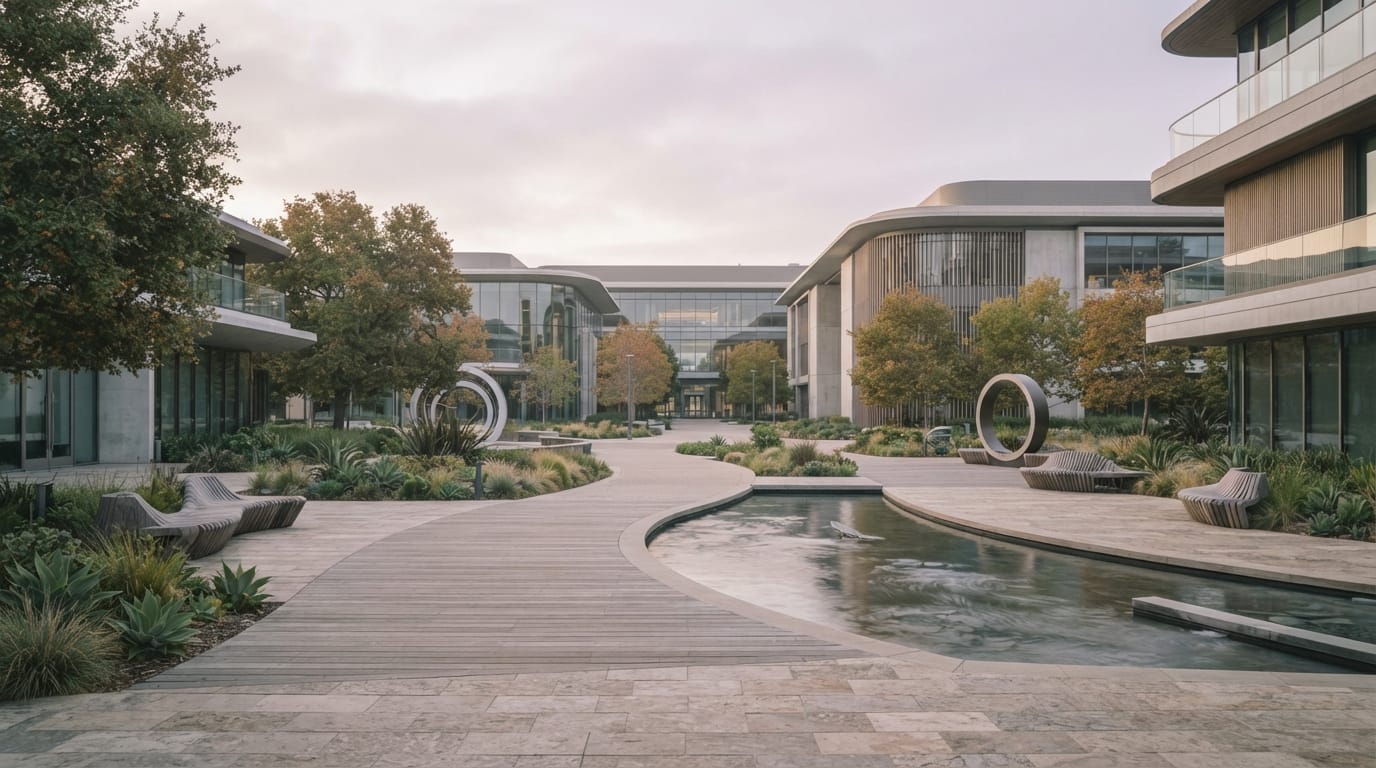
Google anchors the city — roughly one in five jobs, more than a tenth of the municipal budget. Around 43% of Mountain View residents were born outside the United States, many on tech-worker visas. That matters clinically: peer-reviewed work on Indian tech workers on H-1B and dependent H-4 visas documents elevated depression, anxiety, and stress, worst among the dependent spouses who followed a partner here and left their own support behind.
A city can be at the global center of connection technology and still be full of people who are, personally, a long way from anyone who knows them well.
Sources: SF Public Press — Google in Mountain View,H-1B/H-4 mental health study (PMC).
The most connected place, and 37% lonely

Mountain View builds the tools that connect the planet. Its own modeled loneliness estimate sits toward the high end of the 23 cities in this series, with roughly a quarter of adults reporting a lack of social and emotional support. Engineered connectivity and personal connection are not the same variable, and the gap between them shows in the data.
For a population fluent in measurement, this is the honest frame: you have quantified your sleep and your steps. The loneliness number is the one your dashboard doesn’t show — and it responds to treatment, not to another wearable.
Sources: CDC PLACES, 2025 release.
The 2 a.m. loop
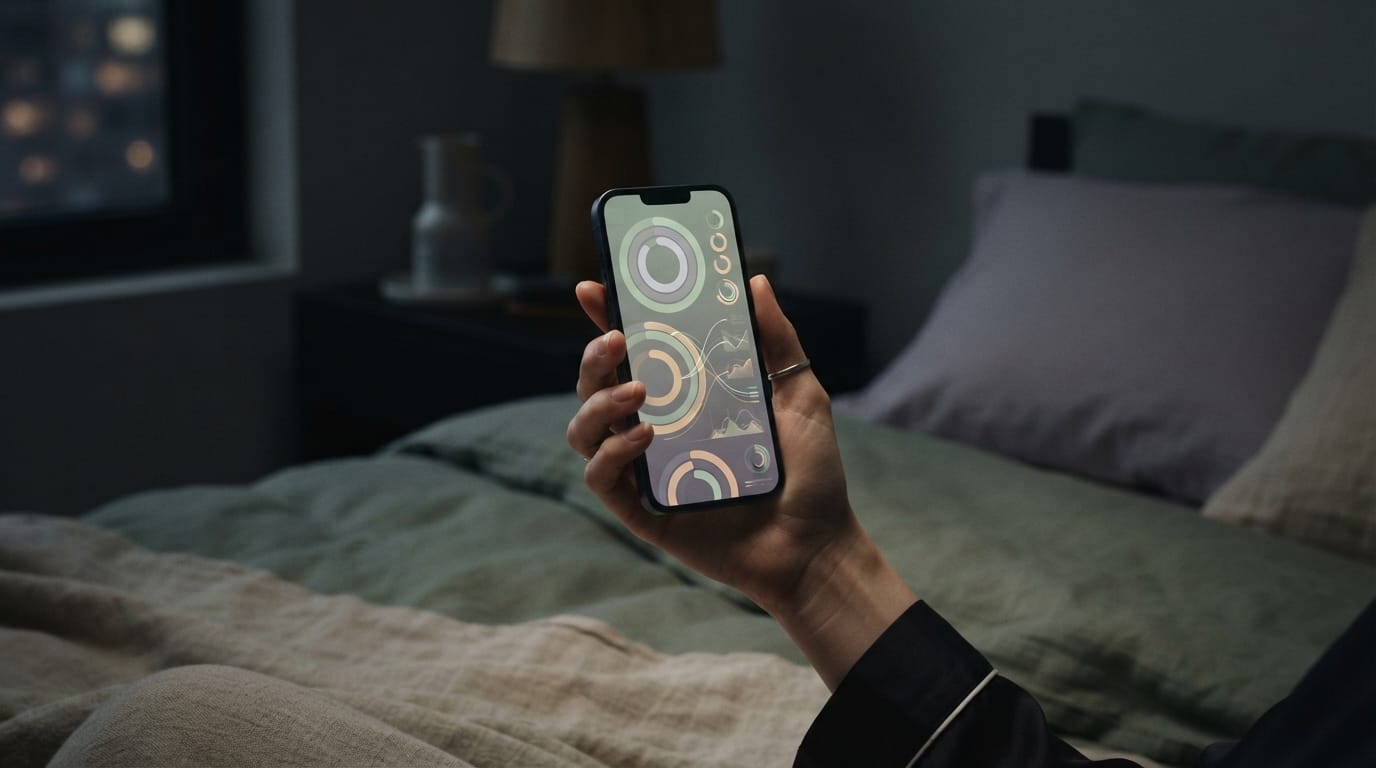
Self-tracking is a genuine good until it becomes the whole relationship you have with your own body: a flagged marker, a late-night search, a new supplement, a scheduled retest, and no clinician in the loop to say which signal matters. The movement that started here gave people data. It did not give them a reader.
That reading — labs and history and symptoms, interpreted together — is the missing step, and it is a clinical skill, not an app.
Bring the panel

You already believe in measurement — this is the city that invented it. The next step is a clinician who will interpret what you have measured against how you actually feel, and who is as comfortable with a lab report as with a psychiatric interview.
That is the work here: dual-trained in psychiatry and primary care, after 19 years reading lab values in intensive care. Bring your panel. Telehealth across California.
If you already have the labs, this is the part nobody does
A lot of people in Mountain View arrive with data — a full panel, a dashboard, a subscription that flagged three markers orange — and no one who will sit down and read it against how they actually feel. That reading is the work. I trained in psychiatry first, then went back and trained in adult-gerontology primary care, after 19 years in intensive care units at USC, Cedars-Sinai, and NewYork-Presbyterian, where the labs were never optional. Bring the panel. We will go through it, decide what matters, treat what should be treated, and let the rest go.
Telehealth across California. Mental health is not only psychiatry — sometimes it is a body that has not been properly investigated, and telling those apart is the whole job.
What happens next
- 1. A free 15-minute call to see whether this is the right fit — no commitment, real availability on the calendar.
- 2. Bring whatever labs you already have — a full panel, a dashboard, or nothing yet. We start from where you are.
- 3. We read it together, decide what matters, and build the plan from there. Most new patients are seen within days.
Horizon Peak Health is verified on Psychology Today.
Bring your panel. Let's read it together.
Start with a free 15-minute call to see if we're a fit — telehealth across california. Most new patients are seen within days.
This page is education, not crisis care. If you are in danger right now, call 911, or call or text 988 for the Suicide & Crisis Lifeline, any hour.