City Minds — Pasadena, California
The Pasadena Mind
Home to Caltech and JPL — one of the densest concentrations of brilliance in America — and, in the same data, one of the highest estimates for loneliness on this list.

The short version
Pasadena is Caltech and JPL — a city organized around elite science, with one of the highest concentrations of Nobel laureates anywhere. The mental-health cost of that pipeline is well documented in the population it draws from.
In this 23-city series, Pasadena tops the list for loneliness and for lacking emotional support. The weakest reading in this brilliant city isn’t metabolic — it’s connection.
That’s the variable no dashboard shows. Dual-trained in psychiatry and primary care, 19 years reading labs in intensive care. Bring your panel. Telehealth across California.
Pasadena, by the numbers
Each bar shows where Pasadena lands among the 23 California and Arizona cities in this series. The vertical tick is the group median; the dot is Pasadena. These are CDC model-based estimates for adults, not head counts.
- Depression
- 19.2%
- Frequent mental distress
- 14.9%
- Loneliness
- 38.4%
- Lacking social & emotional support
- 27.9%
- Insufficient sleep
- 34.1%
- Binge drinking
- 15.4%
adults ever told they have a depressive disorder
14+ days of poor mental health in the past month
adults who report feeling lonely
adults who lack the social and emotional support they need
adults sleeping less than 7 hours a night
adults reporting binge drinking in the past 30 days
Source: CDC PLACES, 2025 release (model-based estimates). Figures are small-area modeled estimates for adults aged 18+, retrieved 2026-07-03. The 23-city median is calculated across the cities in this series, not a national benchmark.
Reading numbers like these against how you actually feel — that’s the appointment. Telehealth across California.
Born from rockets in a dry riverbed

Caltech was founded here in 1891. In 1936, a group of Caltech researchers nicknamed the "Suicide Squad" ran the first alcohol-fueled rocket-motor tests in the dry Arroyo Seco riverbed — the origin of what became NASA’s Jet Propulsion Laboratory, now the only federally funded R&D center NASA operates, run by Caltech. The Tournament of Roses has crowned the city’s winters since 1890; old money has lined the Arroyo’s "Millionaire’s Row" for over a century.
This is a city organized around elite science and precise achievement. Which makes what its residents report about their inner lives all the more worth reading.
Sources: JPL history,Caltech (Wikipedia).
The densest brilliance in America
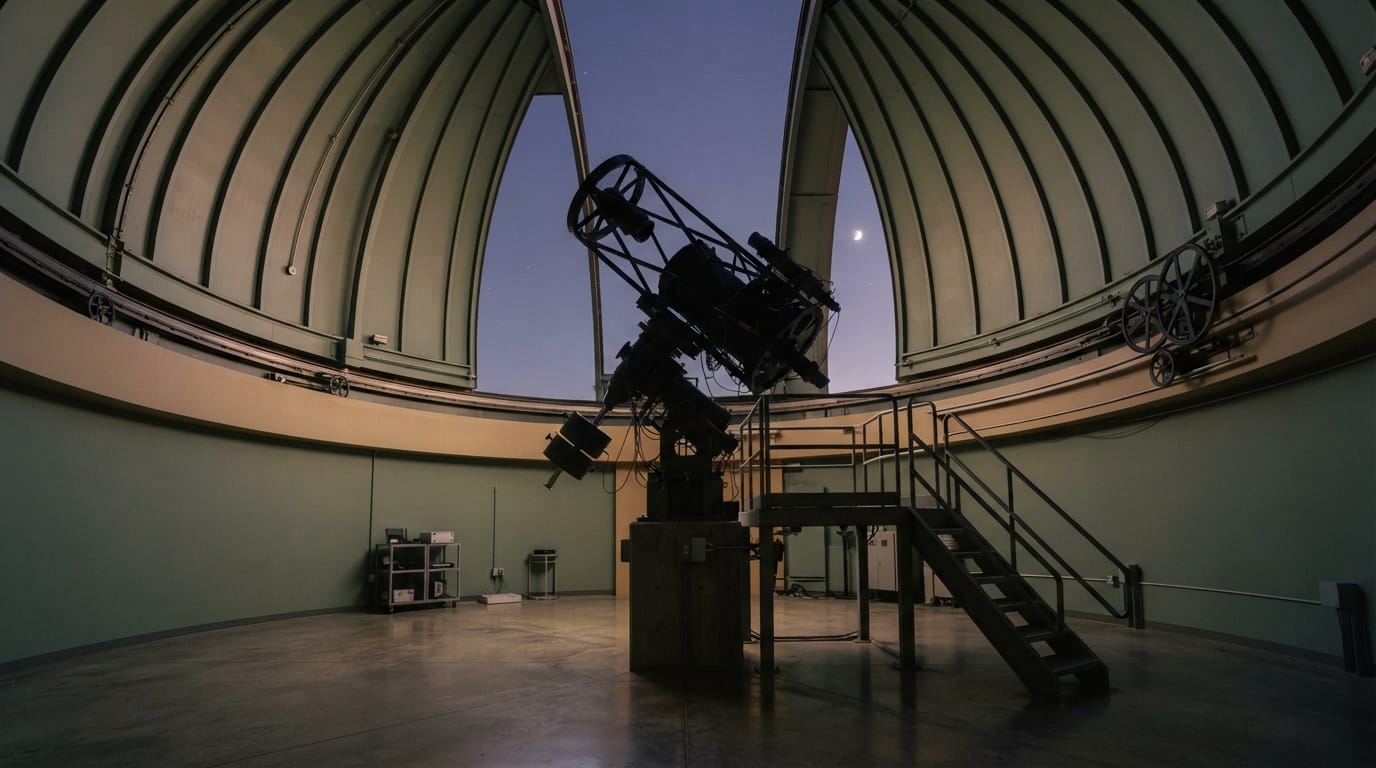
Caltech holds one of the highest concentrations of Nobel laureates of any institution on earth, against a tiny student body of under a thousand undergraduates. JPL packs roughly 5,500 people onto a 168-acre campus. This is achievement culture at its most rarefied.
The cost of that pipeline is documented, if not locally then in the population it draws from: large surveys of graduate students in the sciences report moderate-to-severe anxiety and depression around 40% — many times general-population rates — in training environments described in the literature as competitive and isolating. Brilliance and distress travel together more often than the brochures admit.
Brilliance and loneliness, measured in the same city

Here is the paradox in the data, and it needs no editorializing. Among the 23 cities in this series, Pasadena carries one of the very highest modeled estimates for loneliness and one of the highest for lacking social and emotional support — in a place defined by some of the most capable minds in the country.
For a data-literate reader, the takeaway is precise: the weakest reading in this brilliant city isn’t metabolic or cardiovascular — it’s connection. That is the variable the optimizer’s dashboard never shows, and the one most worth taking seriously here.
Sources: CDC PLACES, 2025 release.
The 2 a.m. loop
A person trained to treat every problem as a system to be optimized will approach their own low mood the same way: more data, more protocols, more self-experiment, at 2 a.m., alone. The instinct that makes someone excellent at science makes them slow to hand the problem to someone else. But mood and connection are not n-of-1 experiments you can reason your way out of.
The interruption is a clinician who will read the whole picture — labs, history, symptoms — and say plainly what matters and what to treat.
Bring the panel

You are good at solving hard problems. This is one worth handing to someone whose job it is — a clinician who takes your data and your history seriously and is as comfortable with a lab report as with a psychiatric interview.
That is the work here: dual-trained in psychiatry and primary care, after 19 years reading lab values in intensive care. Bring your panel. Telehealth across California.
If you already have the labs, this is the part nobody does
A lot of people in Pasadena arrive with data — a full panel, a dashboard, a subscription that flagged three markers orange — and no one who will sit down and read it against how they actually feel. That reading is the work. I trained in psychiatry first, then went back and trained in adult-gerontology primary care, after 19 years in intensive care units at USC, Cedars-Sinai, and NewYork-Presbyterian, where the labs were never optional. Bring the panel. We will go through it, decide what matters, treat what should be treated, and let the rest go.
Telehealth across California. Mental health is not only psychiatry — sometimes it is a body that has not been properly investigated, and telling those apart is the whole job.
What happens next
- 1. A free 15-minute call to see whether this is the right fit — no commitment, real availability on the calendar.
- 2. Bring whatever labs you already have — a full panel, a dashboard, or nothing yet. We start from where you are.
- 3. We read it together, decide what matters, and build the plan from there. Most new patients are seen within days.
Horizon Peak Health is verified on Psychology Today.
Bring your panel. Let's read it together.
Start with a free 15-minute call to see if we're a fit — telehealth across california. Most new patients are seen within days.
This page is education, not crisis care. If you are in danger right now, call 911, or call or text 988 for the Suicide & Crisis Lifeline, any hour.