
Diagnostic Psychiatry
Still trying to explain symptoms that do not fit neatly?
Best fit when the diagnosis, medication history, labs, sleep, hormones, and day-to-day function do not line up cleanly.
Some patients do not need more data. They need the data to stop running the room.
Wearables made a genuine promise: objective signals about sleep, recovery, and physiological state that most people cannot access otherwise. For some patients that promise delivers. They find a pattern, change something, and the numbers improve along with how they feel.
For others, the tracking makes things worse.
I see both presentations. The one I want to talk about is the second.
The Fast Answer
- Wearables are useful when the data changes a clinical decision. Otherwise they may be noise.
- HRV is a signal with a population range. It is not a performance grade.
- Sleep score anxiety — worrying about the score enough to disrupt sleep — is a documented phenomenon.
- CGMs can create food fear and obsessive meal checking that looks like disordered eating.
- Some patients are not collecting data for insight. They are collecting it for control, and the control is not working.
- The metric is not the diagnosis. A clinician should interpret the pattern in context, not the patient at 2 a.m.
If your wearable dashboard is getting cleaner and your life is getting smaller, the data is not helping.
Not every article needs an appointment. Use this page for research. Turn it into a visit when the pattern is affecting a real medication, diagnosis, or daily-function decision.
Turn this into a visit when
- The diagnosis, symptoms, medication response, and body pattern do not line up.
- You have tried treatment, but the explanation still feels incomplete.
- Sleep, labs, hormones, ADHD, mood, anxiety, or medication effects may be tangled together.
Bring this pattern
Available for appropriate patients in California and Arizona.
When Tracking Helps
Wearables have real clinical applications. I am not against them by default.
For patients with sleep apnea, overnight SpO2 trends can support clinical suspicion before a formal sleep study. For patients with mood disorders, HRV and sleep pattern data over weeks can sometimes reveal a pattern that correlates with clinical status. For athletes managing training load, HRV data combined with performance and perceived exertion can inform periodization.
I find the data clinically useful under specific conditions.
- It reveals a pattern the patient could not have noticed subjectively.
- It changes what I recommend or monitor.
- It helps the patient understand their body in a way that reduces anxiety rather than increasing it.
The question I ask every patient who tracks: does this data help you make a decision you would not otherwise make? If the answer is no consistently, we should talk about whether the tracking is serving them.
When Tracking Starts Harming
The harm pattern is usually slow to recognize because it looks like engagement and self-improvement from the outside.
Sleep score anxiety is real. A patient who wakes up and checks their sleep score before deciding how they feel has inverted the signal relationship. The score is supposed to report on physiology. When the patient's mood for the morning depends on the score, the score is driving the experience rather than measuring it.
Orthosomnia — excessive preoccupation with achieving perfect sleep based on tracker data — was described in the clinical sleep literature in 2017 and has been discussed further since. Patients with orthosomnia focus intensely on optimizing sleep metrics, often in ways that paradoxically disrupt the sleep they are trying to improve. They delay bedtime to optimize the pre-sleep window. They avoid social activities that might compress sleep duration. They wake anxious and check the device before the morning has even started.
CGM data can produce a similar effect with food. A patient monitoring blood glucose in real time may become reactive to any spike, eliminating foods that produce transient rises even when those rises are physiologically normal and the overall metabolic picture is healthy. The result can look like orthorexia — rigid food rules built around glucose data rather than genuine metabolic risk.
HRV amplifies anxiety in some patients because HRV is inherently variable. It responds to alcohol, illness, stress, training, menstrual phase, and sleep quality. A patient who wakes up after a hard work week to find their HRV dropped and then spends the morning in a spiral about their health is not gaining information. They are generating alarm with a signal that does not require alarm.
Before you keep searching
If this answer changes what you might do next, pick the next clinical question now.
The Metric Is Not The Diagnosis
HRV is interesting. It reflects autonomic regulation and is lower in the presence of chronic stress, poor sleep, illness, and inadequate recovery. Some studies associate lower HRV with higher cardiovascular risk and poorer health outcomes at the population level.
But a single morning's HRV score is not a diagnosis. A range that is lower than average is not a crisis. A wearable cannot distinguish between low HRV from acute fatigue, chronic anxiety, illness, post-exercise recovery, alcohol effect, or genuine autonomic impairment. It gives a number. The clinical context gives the meaning.
A wearable can measure a signal. It cannot tell you what the signal means in your life.
I see patients who have spent months trying to improve their HRV score while ignoring the actual variables that drive it: poor sleep, unmanaged anxiety, high stimulant and caffeine load, inadequate rest, and chronic work stress. The number is not the treatment target. The contributors are.
The Founder-Specific Problem
Founders and tech professionals have a specific relationship with data that can make wearable harm more likely.
They are trained to trust data over intuition. They are trained to optimize. They often experience discomfort with ambiguity and with not knowing. They are used to dashboards that improve with the right changes. And they are operating in high-pressure environments where any performance edge feels worth pursuing.
That cognitive style, which serves well in many contexts, can be a liability with biometric data.
The body is not a startup. It does not respond to optimization pressure the way a product funnel does. And the feedback loop between wearable data and health anxiety is faster and tighter in people who are trained to act on data immediately.
I have seen patients who are tracking twelve metrics daily, spending significant mental energy on those metrics, and feeling worse than they did before they started tracking. The answer is not to track better. The answer is to stop, for a period, and see what happens to the underlying anxiety when the data disappears.
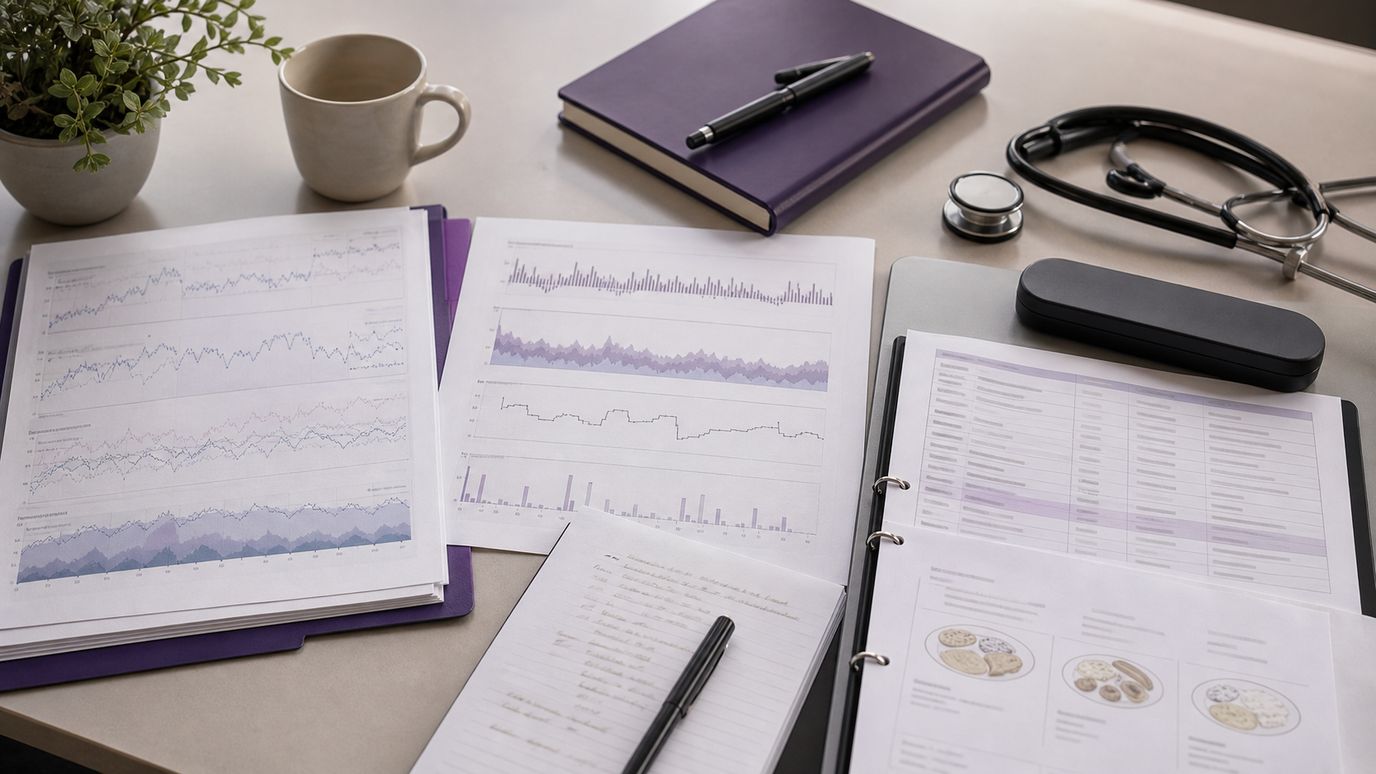
What I Ask Before I Trust The Metric
When a patient comes to me with wearable data as part of their clinical story, I ask these questions before I use any of it clinically.
- Does this data correlate with how you actually feel?
- Do you check the data before or after you assess how you feel?
- Has the data changed anything you are doing?
- Has anything the data told you to change actually worked?
- Do you feel better or worse on days you do not check?
- Is tracking taking up mental space that was previously available for other things?
- Is the data helping your care team or mainly helping your anxiety have more material?
If the data is producing anxiety without producing useful information, that is a clinical finding. Not about the HRV. About the anxiety.
Skim Map
Data that helps vs data that runs the room
A Healthier Tracking Rule
I am not telling patients to throw the watch away.
For patients who are tracking and anxious, I suggest starting here.
- Check aggregate trends, not daily scores. Look at the week, not the morning.
- Decide what you will actually change if the data is low. If the answer is nothing, ask whether checking serves you.
- Stop checking for two weeks and notice whether anxiety goes up, down, or sideways.
- Bring the data to a clinician who can interpret it in context. Do not self-diagnose from a dashboard.
- Notice whether the data has made any decision that improved your actual life. If not, the ROI is negative.
The goal is better decisions, not a more impressive dashboard.
Getting Help In San Francisco
If your biometric data has become a source of health anxiety rather than useful information, Horizon Peak Health offers diagnostic optimization in San Francisco for patients whose optimization goals, biohacking tools, wearable data, and mental health are all connected.
For the broader framework of what is and is not worth optimizing, the biohacking ethics page makes the clinical sequencing argument directly. For women in tech experiencing anxiety and cognitive symptoms after 40, the perimenopause, ADHD, and brain fog post covers the full differential.
If your dashboard is getting cleaner but your life is getting smaller, bring the data. We will decide what deserves attention. What to bring to a diagnostic optimization evaluation covers the rest of the history that makes the data interpretable.
Request a San Francisco diagnostic optimization evaluation
Medical Disclaimer: This article is for educational purposes only and does not constitute medical advice. Anxiety, sleep disorders, eating patterns, wearable data interpretation, biometric monitoring, psychiatric medications, supplements, and any health concern require individualized evaluation by qualified clinicians. Do not start, stop, or change medications, supplements, dietary patterns, or exercise protocols without guidance from qualified clinicians. Seek urgent help for suicidal thoughts, self-harm urges, mania, psychosis, severe agitation, chest pain, fainting, severe shortness of breath, or another emergency. In a mental health crisis, call or text 988 or go to the nearest emergency room.
References
- Khosla S, Deak MC, Gault D, et al. Consumer Sleep Technology: An American Academy of Sleep Medicine Position Statement. Journal of Clinical Sleep Medicine. 2018;14(5):877-880.
- National Heart, Lung, and Blood Institute. Sleep Deprivation and Deficiency.
- U.S. Food and Drug Administration. Prescription Stimulant Medications.
- NIH Office of Dietary Supplements. Dietary Supplements: What You Need to Know.
Where to take this next
Care that picks up where the reading stops
Written by
Canybec Sulayman APRN, PMHNP-BC, CCRN-CSC
Investigating the root causes of mental health symptoms with 19 years of ICU diagnostic rigor.
Want a plan that fits the whole picture?
Bring the symptoms, medication history, labs, sleep pattern, and questions. The goal is a clearer explanation and safer next step.