In this article · 9 sections
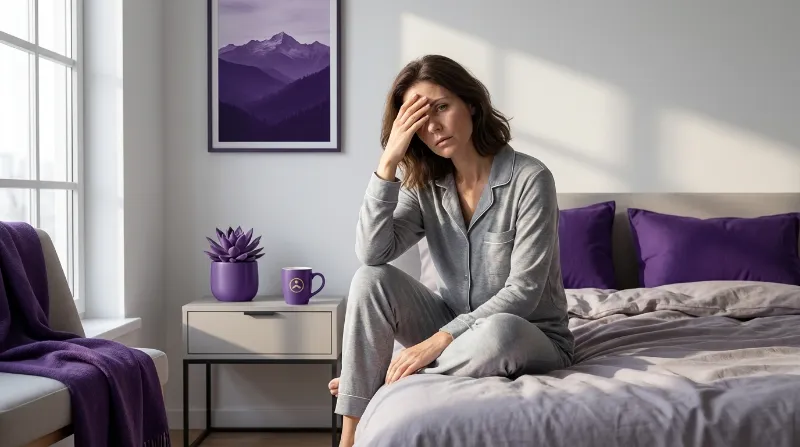
She slept seven and a half hours every night. Her home sleep test came back negative. She still needed three coffees before noon and could not get through a spreadsheet without rechecking the same row.
Because she was lean, ran three days a week, and barely snored, nobody thought about her airway. Two clinics handed her an ADHD screening form instead.
I see that miss often. Upper airway resistance can fragment sleep every few minutes without dropping blood oxygen. The next day can overlap heavily with adult ADHD. Attention scatters, tasks are slow to start, thinking gets foggy, patience runs short, and by evening you are so drained that even getting to bed is hard.
The Short Answer
- Upper airway resistance syndrome (UARS) is non-hypoxic sleep-disordered breathing. Even without major oxygen drops, a narrowed airway triggers repeated brief brain arousals called respiratory effort-related arousals (RERAs) (Guilleminault et al., 1993; PMID: 8365289; Pépin et al., 2012; PMID: 22377755; Arnold & Guilleminault, 2019; PMID: 30689957).
- You do not need to be overweight, older, or a loud snorer to have UARS. In the original Stanford series, only 10 of 15 patients snored and both sexes were affected equally (Guilleminault et al., 1993; PMID: 8365289). Later studies found more women, insomnia, and headaches toward the UARS end of the spectrum (Gold et al., 2003; PMID: 12527607), and one series of South-East Asian jaw-disorder patients with UARS had a mean age of 35.7 and a mean BMI of 20.1 (Tay & Pang, 2018; PMID: 28805272).
- Standard home sleep apnea tests can miss subtle breathing-related arousals. The American Academy of Sleep Medicine strongly recommends polysomnography for diagnosing obstructive sleep apnea (OSA) when a single home sleep test is negative, inconclusive, or technically inadequate, and instead of home testing when severe insomnia is present (Kapur et al., 2017; PMID: 28162150).
- Most research on cognition and ADHD overlap studied OSA and sleep deprivation rather than UARS directly, though reviews note sleep-disordered breathing is under-recognized in youth and adults with ADHD (Ivanov et al., 2024; PMID: 38353411). Sleep deprivation and OSA both show deficits in attention and memory, and in middle-aged adults OSA is often associated with mild impairment in attention, memory, and executive function (Olaithe et al., 2018; PMID: 28760549; Bubu et al., 2020; PMID: 31881487).
- In my experience, stimulants can temporarily override daytime sleepiness without fixing fragmented sleep. I screen for unrefreshing sleep and airway clues before calling adult-onset focus collapse pure ADHD, then coordinate with a sleep specialist or your primary care clinician when formal sleep testing belongs in the plan.
Skim Explainer
Classic sleep apnea, UARS, and the daytime symptoms that look psychiatric
You can have ADHD, sleep-disordered breathing, or both. I want the sleep timeline on the table before deciding.

Diagnostic Clarity
ADHD, burnout, sleep, anxiety, or something medical?
Best fit when focus problems need to be separated from anxiety, sleep debt, burnout, mood, medication effects, or a medical driver.
Turn this into a visit when
Not every article needs an appointment. Use this page for research. Turn it into a visit when the pattern is affecting a real medication, diagnosis, or daily-function decision.
- Focus problems are affecting work, school, relationships, or daily follow-through.
- ADHD, burnout, anxiety, depression, sleep debt, or hormones all seem possible.
- Medication is on the table, but the diagnosis has not been checked carefully enough.
Bring this pattern
- childhood pattern
- current function
- sleep schedule
- anxiety or mood history
- prior testing or stimulant history
Available for appropriate patients in California and Arizona.
What UARS actually is and why lean adults get overlooked
Most people picture sleep apnea one way: a middle-aged man with a thick neck who snores loudly enough to shake the bedroom wall and stops breathing until he gasps.
That stereotype misses an entire end of the sleep-disordered breathing spectrum.
In 1993, Christian Guilleminault and colleagues at Stanford studied 15 adults with unexplained chronic daytime sleepiness who did not meet criteria for classic obstructive sleep apnea (Guilleminault et al., 1993; PMID: 8365289). Their oxygen levels were not crashing. Instead, narrowed upper airway passages forced increased inspiratory effort until a brief alpha EEG micro-arousal jolted the brain just enough to reopen the airway. Only 10 of the 15 snored, men and women were represented equally, and nasal CPAP dropped their mean arousal index from 31.3 to 8 events per hour while raising daytime sleep latency on testing from 5.1 minutes to 13.5 minutes (Guilleminault et al., 1993; PMID: 8365289).
The International Classification of Sleep Disorders does not list UARS as its own diagnosis and files these patients as a subgroup of OSA, while still describing respiratory effort-related arousals (RERAs) as abnormal respiratory events that require specific scoring (Pépin et al., 2012; PMID: 22377755).
Cohort data point the same way. In the MESA sleep cohort, among 772 adults with an AHI below 15, more frequent flow limitation was associated with about twice the odds of excessive daytime sleepiness (odds ratio 2.04; 95% confidence interval, 1.17 to 3.54 per 2-standard-deviation increase) (Mann et al., 2024; PMID: 38530665). That estimate was adjusted for age, sex, body mass index, race/ethnicity, and sleep duration, and changed little after also adjusting for AHI (Mann et al., 2024; PMID: 38530665).
"When a lean 38-year-old sleeps eight hours and wakes up feeling hungover without touching alcohol, I do not assume they just need a higher stimulant dose."
Here is the clinical part that matters for psychiatry. Patients with UARS look very different in the waiting room than classic sleep apnea stereotypes. In a 75-patient university sleep-center study comparing UARS (defined there as AHI under 10/h with documented inspiratory flow limitation) against mild-to-moderate and moderate-to-severe OSA, decreasing AHI severity into the UARS range correlated with a higher proportion of women, more sleep-onset insomnia, more headaches, and more irritable bowel syndrome (Gold et al., 2003; PMID: 12527607). A later retrospective series of 137 UARS patients and 220 OSA patients also found that sleep-onset insomnia rose steadily from severe sleep apnea toward UARS, even while daytime sleepiness in UARS matched mild obstructive sleep apnea (Gold et al., 2008; PMID: 18024168).
Body build and jaw or nasal anatomy often tell a different story too. In a multicenter prospective series of 86 South-East Asian temporomandibular disorder patients with comorbid UARS (all with AHI under 5 and excessive daytime sleepiness), the mean age was 35.7 years and the mean BMI was 20.1, alongside high rates of nasal congestion (91.9%), sleep bruxism (90.7%), headaches (66.3%), and depression (68.6%) (Tay & Pang, 2018; PMID: 28805272). Bao and Guilleminault wrote in a 2004 review that most of these patients are seen by psychiatrists (Bao & Guilleminault, 2004; PMID: 15510051).
And the day-to-day cost is not minor. A 2022 retrospective study from a referral sleep center in Lima, Peru compared 93 adults with UARS (aged 18 to 64, AHI under 5 events/hour, oxygen saturation at least 92%, and RERA index at least 5) and 795 adults with OSA against 641 general-population controls (Vizcarra-Escobar et al., 2022; PMID: 34931609). Mean SF-36 quality-of-life scores were nearly identical in UARS (67.4) and OSA (66.9), both far below the general population (82.9). The probability of a low total quality-of-life score was 5.5 times greater in UARS and 6.2 times greater in OSA than in the general population (Vizcarra-Escobar et al., 2022; PMID: 34931609).
I read that as a reason to ask about sleep before I ask about dose.
How fragmented sleep mimics adult ADHD
Adult ADHD is a neurodevelopmental condition with roots in childhood, even when high structure or intelligence masked it for years. Sleep-disordered breathing can produce overlapping attention and memory problems at age 32 or 45, or make real ADHD much harder to manage.
Most of the cognitive research in this area studied obstructive sleep apnea and sleep deprivation rather than UARS directly, so I treat the link to UARS as plausible rather than proven. A meta-review of 18 systematic reviews and meta-analyses comparing untreated OSA, sleep deprivation, insomnia, and COPD found that both OSA and sleep deprivation were accompanied by deficits in attention and memory, pointing to sleep disturbance in those domains. OSA and COPD shared broader deficits in attention, memory, executive function, psychomotor function, and language (Olaithe et al., 2018; PMID: 28760549). A separate systematic review integrating three decades of research reported that in middle-aged adults, obstructive sleep apnea is often associated with mild impairment in attention, memory, and executive function (Bubu et al., 2020; PMID: 31881487).
Adult sleep-clinic data show how often the two symptom lists collide. In a study of 194 adults referred to a sleep center who completed both diagnostic polysomnography and the Adult ADHD Self-Report Scale (83% had OSA), 19% screened positive for ADHD symptoms; screening positive did not track with OSA severity, and OSA patients who screened positive reported higher daytime sleepiness scores (Hesselbacher et al., 2019; PMID: 31803561). A 2024 review of sleep-disordered breathing and ADHD across youth and adults noted that sleep-disordered breathing is under-recognized in ADHD and highlighted sleep fragmentation, hypoxia, and inflammation as possible mechanisms behind overlapping distractibility and inattention (Ivanov et al., 2024; PMID: 38353411).
Earlier reviews found the same pattern, with clear caveats. A 2011 systematic review reported attentional deficits in up to 95% of OSA patients and an OSA incidence of 20% to 30% in full syndromal ADHD (Youssef et al., 2011; PMID: 21808754). All six interventional studies it found reported improvements in behavior, inattention, and overall ADHD after OSA treatment, though the review abstract does not break out adult versus pediatric cohorts and the authors said controlled trials are still required (Youssef et al., 2011; PMID: 21808754). A meta-analysis of 18 pediatric studies also found a medium relationship between sleep-disordered breathing and ADHD symptoms (Hedges' g = 0.57) (Sedky et al., 2014; PMID: 24581717).
That mix tells me two things in clinic: sleep-breathing problems and ADHD can look alike, and they can sit in the same chair at the same time.

Before you keep searching
If this answer changes what you might do next, pick the next clinical question now.
Adult ADHD vs. UARS vs. classic sleep apnea
No checklist diagnoses either condition on its own, and many patients carry both. Still, the timeline usually leaves clues that a 15-minute intake misses.
| Clinical clue | Adult ADHD (primary) | Upper airway resistance syndrome (UARS) | Classic obstructive sleep apnea (OSA) |
|---|---|---|---|
| Age when focus broke down | Present since childhood or adolescence, even if compensated until adult workload increased | Often emerges or worsens in adulthood, after nasal obstruction, jaw or airway changes, or midlife shifts | Often emerges or worsens with age, neck circumference, weight gain, or menopause |
| Morning feeling after 7 to 8 hours in bed | Variable; often tied to late bedtime or circadian delay rather than pure sleepiness | Frequently unrefreshed, heavy-headed, or needing caffeine immediately despite adequate time in bed | Unrefreshed mornings, dry mouth, morning headaches, or noticeable daytime sleepiness |
| Nighttime clues | Racing thoughts at bedtime, delayed sleep phase, losing track of time | Light or absent snoring, frequent brief awakenings, jaw clenching or bruxism, nasal congestion, sleep-onset insomnia (Gold et al., 2003; PMID: 12527607; Tay & Pang, 2018; PMID: 28805272) | Habitual snoring, witnessed pauses or gasping, nocturia |
| Home sleep test | Normal unless sleep breathing coexists | Can return normal (AHI under 5) because UARS diagnosis needs polysomnography with additional measurement channels (Bao & Guilleminault, 2004; PMID: 15510051) | Often detects moderate-to-severe cases |
| Response to stimulants | Often improves sustained attention and task follow-through when properly dosed | In my experience, can feel helpful for alertness at first, then bring jitteriness, an afternoon crash, or worse sleep | May mask daytime fatigue while airway collapse and medical risks continue |
If your symptoms look closer to pure short sleep from late work nights than unrefreshing eight-hour nights, read how sleep debt mimics ADHD. If weight change or a GLP-1 prescription shifted your sleep and daytime energy recently, our GLP-1 and sleep apnea guide walks through that overlap too.
Why a "negative" home sleep test does not end the question
I hear this sentence almost every week: "I already had a home sleep study and it was normal, so it must be ADHD."
Sometimes the home study really did rule out a breathing problem. Sometimes it did not measure what needed measuring.
The American Academy of Sleep Medicine's clinical practice guideline for diagnosing adult obstructive sleep apnea lays out clear limits on home sleep apnea testing (Kapur et al., 2017; PMID: 28162150). Four strong recommendations for diagnosing OSA matter directly for patients stuck in this gray zone.
- Clinical tools, questionnaires, and prediction algorithms should not be used to diagnose OSA in adults without polysomnography or home sleep apnea testing.
- Polysomnography or a technically adequate home sleep apnea test is recommended for diagnosing OSA in uncomplicated adults with signs and symptoms pointing to an increased risk of moderate-to-severe OSA.
- In-lab polysomnography is recommended rather than home sleep apnea testing in adults with severe insomnia or certain medical comorbidities (such as significant cardiorespiratory disease, neuromuscular respiratory weakness, hypoventilation, chronic opioid use, or history of stroke).
- If a single home sleep apnea test is negative, inconclusive, or technically inadequate, polysomnography should be performed to diagnose OSA (Kapur et al., 2017; PMID: 28162150).
Why does that matter when UARS is on the table? Because UARS is defined by respiratory effort-related arousals (RERAs) without major oxygen desaturations (Pépin et al., 2012; PMID: 22377755; Vizcarra-Escobar et al., 2022; PMID: 34931609). Diagnosing UARS requires nocturnal polysomnography with additional measurement channels rather than a basic oxygen-focused screen (Bao & Guilleminault, 2004; PMID: 15510051). Even with in-lab testing, not every sleep laboratory routinely scores RERAs or reports the respiratory disturbance index (RDI) alongside the apnea-hypopnea index (AHI) unless the ordering sleep clinician asks.
What I check before prescribing
Horizon Peak Health is a diagnostic psychiatry practice providing psychiatric evaluation and medication management. We are not primary care and we are not a sleep medicine laboratory, so we do not perform sleep studies or manage medical airway devices in-house.
I am board-certified in psychiatric-mental health and adult-gerontology primary care (PMHNP-BC, AGPCNP-BC). The visit is still a psychiatric evaluation. What I can do inside it is take a sleep history seriously before labeling someone with ADHD or escalating a dose. In a 60-minute initial evaluation, I review four clinical areas.
- Childhood versus adult onset: Did executive dysfunction show up in elementary or middle school, or did focus collapse only after sleep turned unrefreshing in your 30s or 40s?
- Sleep quality versus sleep duration: Are you sleeping five hours by habit, or getting seven to eight hours and still waking up foggy with dry mouth, morning headaches, jaw soreness, nasal congestion, or middle-of-the-night awakenings?
- Prior medication response: Did a stimulant make you feel wired, anxious, or worse at night without delivering clean focus?
- Parallel medical mimics: Do recent labs you already have, such as ferritin and iron storage, thyroid function, B12, vitamin D, metabolic markers, or perimenopause timing, explain part of the fatigue?
When your sleep history points toward UARS or obstructive sleep apnea, I do not pretend psychiatry can treat an airway problem with a higher pill dose. I document the clinical clues and coordinate with your primary care clinician or a board-certified sleep medicine specialist so you can ask the right questions about in-lab polysomnography and RERA scoring. At the same time, we decide whether psychiatric treatment, non-stimulant focus care, or behavioral sleep-wake structure belongs in your plan right now.
What to bring to an evaluation
If you want to sort out adult ADHD versus unrefreshing sleep, bring specifics rather than a label.
- Any prior sleep study report (the full scored PDF rather than just a portal note saying "normal"; look for AHI, RDI, RERA index, arousal index, and minimum oxygen saturation).
- Your actual bedtime, wake time, awakenings, morning symptoms, and caffeine or alcohol timing.
- Childhood school or work history showing whether attention issues are lifelong or newer.
- Current medications, supplements, and any prior stimulant or antidepressant trials.
- Recent blood work if you have it (CBC, ferritin/iron panel, thyroid, metabolic labs).
Read how our ADHD assessment works, review the Reset evaluation guide, or request a diagnostic evaluation.
A self-pay initial evaluation is $275 for 60 minutes with either clinician; follow-up visits are $150 for 30 minutes. If you plan to use commercial insurance, our team checks your specific plan and benefits before confirming an evaluation. We complete most insurance checks the same business day. Timing depends on your plan and network status. You hear from us before any charge. That includes anything your insurance leaves for you to pay. A listed plan does not establish in-network status; benefits verification does not guarantee coverage or your final cost.
I see patients ages 10 and older in California and Arizona via statewide telehealth. I also see patients in person in Gilbert, Arizona (Wednesday through Friday) and Rancho Palos Verdes, California, and offer limited San Francisco in-person visits by appointment. In California, adults may also see Sharon Hernandez, PMHNP-BC, AGPCNP-BC via telehealth or in person in Rancho Palos Verdes.
Common questions about UARS, sleep apnea, and adult ADHD
Can upper airway resistance syndrome (UARS) cause ADHD-like symptoms in adults?
It can. UARS fragments sleep through repeated respiratory effort-related arousals (RERAs) even when oxygen stays normal (Guilleminault et al., 1993; PMID: 8365289; Pépin et al., 2012; PMID: 22377755). The attention research was done in obstructive sleep apnea and sleep deprivation, not UARS specifically: both are accompanied by deficits in attention and memory (Olaithe et al., 2018; PMID: 28760549), and in middle-aged adults OSA is often associated with mild impairment in attention, memory, and executive function (Bubu et al., 2020; PMID: 31881487). I treat UARS as a plausible cause of ADHD-like complaints, not a proven one.
Why can a home sleep apnea test miss UARS?
Many home sleep apnea tests focus on oxygen drops and airflow pauses to calculate the apnea-hypopnea index (AHI), whereas diagnosing UARS needs nocturnal polysomnography with additional measurement channels to score respiratory effort-related arousals (Bao & Guilleminault, 2004; PMID: 15510051). In UARS, AHI is typically below 5 and oxygen stays normal while RERAs still disrupt sleep (Vizcarra-Escobar et al., 2022; PMID: 34931609). The American Academy of Sleep Medicine strongly recommends polysomnography for diagnosing OSA when a single home sleep test is negative, inconclusive, or technically inadequate, and instead of home testing when severe insomnia is present (Kapur et al., 2017; PMID: 28162150).
Can lean adults or women who barely snore have UARS?
Yes. UARS does not require obesity or loud snoring. In Guilleminault's original series, snoring occurred in 10 of 15 patients and both sexes were affected equally (Guilleminault et al., 1993; PMID: 8365289). Later sleep-center research found higher proportions of women, sleep-onset insomnia, headaches, and irritable bowel syndrome in UARS than in more severe obstructive sleep apnea (Gold et al., 2003; PMID: 12527607; Gold et al., 2008; PMID: 18024168). A series of South-East Asian jaw-disorder patients with UARS had a mean BMI of 20.1 (Tay & Pang, 2018; PMID: 28805272).
Should I stop my ADHD medication if I suspect UARS or sleep apnea?
No. Never stop, cut, or change a prescribed psychiatric or ADHD medication on your own. Bring your sleep symptoms and medication timeline to your prescriber so they can evaluate whether the dose or timing is worsening sleep and coordinate with a sleep specialist or primary care clinician for formal sleep testing.
Medical Disclaimer: This article is for educational purposes only and does not constitute medical advice, a sleep medicine diagnosis, or an individual treatment plan. Horizon Peak Health provides psychiatric evaluation and medication management, not primary care or diagnostic sleep laboratory testing. Do not start, stop, taper, or adjust psychiatric medications, stimulants, or sleep aids without guidance from the prescriber who knows your medical history. If you experience severe daytime sleepiness that makes driving unsafe, do not drive and seek prompt medical evaluation. For chest pain, fainting, severe shortness of breath, witnessed breathing pauses with unresponsiveness, or immediate danger, call 911. If you are having suicidal thoughts, thoughts of self-harm, mania, psychosis, or a mental health crisis, call or text 988 (Suicide & Crisis Lifeline) or go to your nearest emergency room.
References
16 sources
- Guilleminault C, Stoohs R, Clerk A, Cetel M, Maistros P. A cause of excessive daytime sleepiness. The upper airway resistance syndrome. Chest. 1993;104(3):781-787. DOI: 10.1378/chest.104.3.781.
- Gold AR, Dipalo F, Gold MS, O'Hearn D. The symptoms and signs of upper airway resistance syndrome: a link to the functional somatic syndromes. Chest. 2003;123(1):87-95. DOI: 10.1378/chest.123.1.87.
- Gold AR, Gold MS, Harris KW, Espeleta VJ, Amin MM, Broderick JE. Hypersomnolence, insomnia and the pathophysiology of upper airway resistance syndrome. Sleep Med. 2008;9(6):675-683. DOI: 10.1016/j.sleep.2007.08.013.
- Bao G, Guilleminault C. Upper airway resistance syndrome--one decade later. Curr Opin Pulm Med. 2004;10(6):461-467. DOI: 10.1097/01.mcp.0000143689.86819.c2.
- Pépin JL, Guillot M, Tamisier R, Lévy P. The upper airway resistance syndrome. Respiration. 2012;83(6):559-566. DOI: 10.1159/000335839.
- Arnold WC, Guilleminault C. Upper airway resistance syndrome 2018: non-hypoxic sleep-disordered breathing. Expert Rev Respir Med. 2019;13(4):317-326. DOI: 10.1080/17476348.2019.1575731.
- Tay DKL, Pang KP. Clinical phenotype of South-East Asian temporomandibular disorder patients with upper airway resistance syndrome. J Oral Rehabil. 2018;45(1):25-33. DOI: 10.1111/joor.12551.
- Vizcarra-Escobar D, Duque KR, Barbagelata-Agüero F, Vizcarra JA. Quality of life in upper airway resistance syndrome. J Clin Sleep Med. 2022;18(5):1263-1270. DOI: 10.5664/jcsm.9838.
- Mann DL, Staykov E, Georgeson T, et al. Flow Limitation Is Associated with Excessive Daytime Sleepiness in Individuals without Moderate or Severe Obstructive Sleep Apnea. Ann Am Thorac Soc. 2024;21(8):1186-1193. DOI: 10.1513/AnnalsATS.202308-710OC.
- Kapur VK, Auckley DH, Chowdhuri S, et al. Clinical Practice Guideline for Diagnostic Testing for Adult Obstructive Sleep Apnea: An American Academy of Sleep Medicine Clinical Practice Guideline. J Clin Sleep Med. 2017;13(3):479-504. DOI: 10.5664/jcsm.6506.
- Olaithe M, Bucks RS, Hillman DR, Eastwood PR. Cognitive deficits in obstructive sleep apnea: Insights from a meta-review and comparison with deficits observed in COPD, insomnia, and sleep deprivation. Sleep Med Rev. 2018;38:39-49. DOI: 10.1016/j.smrv.2017.03.005.
- Bubu OM, Andrade AG, Umasabor-Bubu OQ, et al. Obstructive sleep apnea, cognition and Alzheimer's disease: A systematic review integrating three decades of multidisciplinary research. Sleep Med Rev. 2020;50:101250. DOI: 10.1016/j.smrv.2019.101250.
- Hesselbacher S, Aiyer AA, Surani SR, Suleman AA, Varon J. A Study to Assess the Relationship between Attention Deficit Hyperactivity Disorder and Obstructive Sleep Apnea in Adults. Cureus. 2019;11(10):e5979. DOI: 10.7759/cureus.5979.
- Ivanov I, Miraglia B, Prodanova D, Newcorn JH. Sleep Disordered Breathing and Risk for ADHD: Review of Supportive Evidence and Proposed Underlying Mechanisms. J Atten Disord. 2024;28(5):686-698. DOI: 10.1177/10870547241232313.
- Youssef NA, Ege M, Angly SS, Strauss JL, Marx CE. Is obstructive sleep apnea associated with ADHD? Ann Clin Psychiatry. 2011;23(3):213-224.
- Sedky K, Bennett DS, Carvalho KS. Attention deficit hyperactivity disorder and sleep disordered breathing in pediatric populations: a meta-analysis. Sleep Med Rev. 2014;18(4):349-356. DOI: 10.1016/j.smrv.2013.12.003.
Where to take this next
Care that picks up where the reading stops
Want a plan that fits the whole picture?
Bring the symptoms, medication history, labs, sleep pattern, and questions. The goal is a clearer explanation and safer next step.
Request an Evaluation Read the service page first