In this article · 12 sections
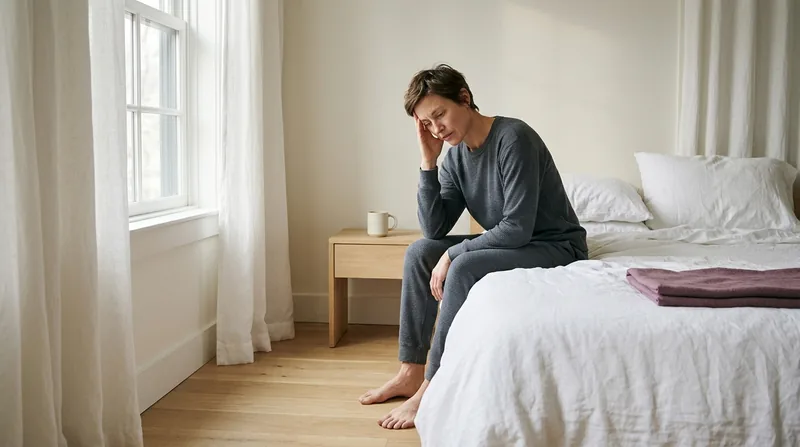
She was in bed by 10:30 p.m. and up at 6:30 a.m. almost every day. Her wearable logged eight hours. By 7:15 she was leaning on the kitchen counter, waiting for coffee to turn her brain on. She felt like she had sat up through a red-eye.
Her routine annual labs came back in range. She left the visit with a vague suggestion to reduce stress and a question about whether she should try an antidepressant.
I hear that story often in diagnostic psychiatry. Time in bed and restorative sleep are not the same thing. When you log seven to eight hours and still wake up heavy-headed, one quick label rarely explains it. The cause usually sits in one or more of five overlapping areas: sleep fragmented by breathing or limb movements, iron stores and thyroid function, caffeine and alcohol timing, psychiatric medication side effects, and mood or midlife hormone shifts.
The Short Answer
- Waking unrefreshed after enough time in bed is called nonrestorative sleep. In a survey of 25,580 adults and adolescents across seven European countries, 10.8% reported it, women more often than men (12.5% vs. 9.0%). It was linked to more daytime impairment than trouble falling or staying asleep alone, and people with nonrestorative sleep consulted a physician about their sleep twice as often (Ohayon, 2005; PMID: 15642872).
- Sleep-breathing disorders such as obstructive sleep apnea (OSA) and upper airway resistance syndrome (UARS) can fragment sleep even when you do not remember waking up. The American Academy of Sleep Medicine (AASM) strongly recommends in-lab polysomnography (an overnight sleep study in a lab) for diagnosing OSA when a single home sleep test is negative, inconclusive, or technically inadequate, and instead of home testing when severe insomnia is present (Kapur et al., 2017; PMID: 28162150).
- Low iron storage (ferritin) can contribute to fatigue even without anemia, and in restless legs syndrome (RLS) the AASM cites an expert consensus threshold of serum ferritin 75 ng/mL or lower for considering iron therapy (Vaucher et al., 2012; PMID: 22777991; Houston et al., 2018; PMID: 29626044; Winkelman et al., 2025; PMID: 39324694).
- Overt hypothyroidism requires medical evaluation and treatment, whereas a 2018 meta-analysis of 21 randomized trials found that thyroid hormone therapy did not improve quality of life or thyroid-related symptoms in nonpregnant adults with subclinical hypothyroidism (Chaker et al., 2022; PMID: 35589725; Feller et al., 2018; PMID: 30285179).
- Afternoon caffeine, evening alcohol (as little as two standard drinks), perimenopausal hormone shifts, and current antidepressants can all degrade sleep quality or leave you sedated the next day without shortening your hours in bed (Gardiner et al., 2023; PMID: 36870101; Gardiner et al., 2025; PMID: 39631226; Baker, 2023; PMID: 37011660; Wichniak et al., 2017; PMID: 28791566).
- Horizon Peak Health provides psychiatric evaluation and medication management, not primary care or sleep laboratory testing. Before reaching for a new psychiatric prescription, I review your sleep history, medication timing, psychiatric differential, and recent labs or sleep reports you already have, then coordinate with your primary care clinician, OB-GYN, or a sleep specialist for medical workups that belong outside psychiatry.
Skim Explainer
Why eight hours on the clock can still leave you depleted
Unrefreshing sleep is a symptom, not a diagnosis. Sorting out which of these applies prevents months of chasing the wrong prescription.

Diagnostic Psychiatry
Still trying to explain symptoms that do not fit neatly?
Best fit when the diagnosis, medication history, labs, sleep, hormones, and day-to-day function do not line up cleanly.
Turn this into a visit when
Not every article needs an appointment. Use this page for research. Turn it into a visit when the pattern is affecting a real medication, diagnosis, or daily-function decision.
- The diagnosis, symptoms, medication response, and body pattern do not line up.
- You have tried treatment, but the explanation still feels incomplete.
- Sleep, labs, hormones, ADHD, mood, anxiety, or medication effects may be tangled together.
Bring this pattern
- timeline
- medication history
- labs if available
- sleep pattern
- what has not made sense
Available for appropriate patients in California and Arizona.
What nonrestorative sleep is and how common it is
Nonrestorative sleep is easy to dismiss because the clock looks fine. You went to bed on time. You did not lie awake for three hours. Yet the first two hours after waking feel like wading through wet concrete.
In a large population survey of 25,580 participants aged 15 to 100 across seven European countries, 10.8% reported nonrestorative sleep, with higher rates in women (12.5%) than men (9.0%) (Ohayon, 2005; PMID: 15642872). Multivariate analysis tied nonrestorative sleep to difficulty getting started in the morning, anxiety, bipolar or depressive disorders, stressful life circumstances, and physical disease. Compared with people who had trouble falling or staying asleep without unrefreshing mornings, people with nonrestorative sleep reported more daytime irritability and mental fatigue and consulted a physician about their sleep twice as often (Ohayon, 2005; PMID: 15642872).
In my clinic, the mistake I see most often is assuming that eight hours in bed rules out a sleep problem and automatically proves depression or burnout. Sometimes mood is driving the fatigue. Just as often, something physiological is fragmenting sleep quietly in the background, or a daily habit or prescription is blunting restorative stages.

1. Sleep-disordered breathing and movement disorders
You do not need loud snoring or witnessed gasping to have breathing-related sleep fragmentation. In classic obstructive sleep apnea (OSA), airway collapse drops airflow and blood oxygen. In upper airway resistance syndrome (UARS), narrowed airway passages force extra breathing effort and trigger brief brain arousals before oxygen drops significantly.
A 2022 retrospective study from a referral sleep center in Lima, Peru compared 93 adults with UARS and 795 adults with OSA (aged 18 to 64) against 641 general-population controls (Vizcarra-Escobar et al., 2022; PMID: 34931609). UARS was defined by an apnea-hypopnea index under 5 events per hour, oxygen saturation of at least 92%, and a respiratory effort-related arousal index of at least 5. Mean scores on the SF-36 health survey were nearly identical in UARS (67.4) and OSA (66.9), both far below the general population (82.9), representing a 5.5 times and 6.2 times greater probability of a low total quality-of-life score than the general population (Vizcarra-Escobar et al., 2022; PMID: 34931609).
A negative home sleep apnea test does not automatically settle the question either. The AASM clinical practice guideline for diagnosing adult OSA states that symptom questionnaires alone should not be used to diagnose sleep apnea (Kapur et al., 2017; PMID: 28162150). It recommends in-lab polysomnography instead of home testing when severe insomnia or certain medical comorbidities are present. When a single home sleep test comes back negative, inconclusive, or technically inadequate, it strongly recommends performing in-lab polysomnography (Kapur et al., 2017; PMID: 28162150).
I do not accept one negative home test as the end of the question when the history still points at breathing. If unrefreshing mornings come paired with scattered focus, jaw clenching, dry mouth, or morning headaches, read our full breakdown of how UARS and sleep apnea can mimic adult ADHD. If you are nodding off at the wheel, stop driving and get a medical evaluation promptly.
Restless legs syndrome (RLS) and periodic limb movements can disrupt sleep without you noticing full awakenings. The 2025 AASM clinical practice guideline states that the first step in managing RLS is addressing exacerbating factors, including alcohol, caffeine, antihistaminergic, serotonergic, and antidopaminergic medications, and untreated obstructive sleep apnea, alongside regular serum iron studies (ferritin and transferrin saturation), ideally drawn in the morning after at least 24 hours without iron-containing supplements or foods (Winkelman et al., 2025; PMID: 39324694).
When severe, prolonged morning grogginess (sleep inertia) and daytime sleepiness persist despite adequate, well-timed sleep and normal breathing on testing, a sleep specialist may evaluate for central disorders of hypersomnolence such as idiopathic hypersomnia or narcolepsy. A 2024 bi-centric study found that a validated Sleep Inertia Questionnaire distinguished patients with central hypersomnolence from healthy controls even after accounting for depression, eveningness, and medication use (Sung et al., 2024; PMID: 39067151).
Before you keep searching
If this answer changes what you might do next, pick the next clinical question now.
2. Low ferritin and thyroid: what the evidence supports
Patients who wake up exhausted are frequently handed two opposite messages: either "your routine labs are fine, so nothing is medical," or online claims that a single borderline lab explains everything. The evidence falls between them.
Non-anemic low iron storage (ferritin)
Standard annual blood work often includes a complete blood count (hemoglobin and hematocrit) without serum ferritin. Hemoglobin reflects the oxygen-carrying capacity of your red blood cells, while serum ferritin reflects iron stores (with higher thresholds and transferrin saturation needed when chronic inflammation is present) (Cappellini et al., 2020; PMID: 31665543).
In a multicenter randomized controlled trial of 198 nonanemic menstruating women aged 18 to 53 with unexplained fatigue, normal hemoglobin (above 12.0 g/dL), and ferritin below 50 µg/L, 12 weeks of oral ferrous sulfate (80 mg elemental iron daily) reduced fatigue scores by 47.7% compared with 28.8% on placebo (an 18.9 percentage-point difference; 95% CI -34.5 to -3.2), though it did not significantly change depression, anxiety, or quality-of-life scores (Vaucher et al., 2012; PMID: 22777991). A 2018 systematic review and meta-analysis of 18 randomized trials (1,170 iron-deficient non-anemic adults) found that iron supplementation reduced subjective fatigue (standardized mean difference -0.38 across four trials, 714 participants), while not changing objective maximal exercise capacity (Houston et al., 2018; PMID: 29626044).
For adults with clinically significant restless legs syndrome, the 2025 AASM guideline notes expert consensus guidelines (which have not been empirically tested and differ from general population thresholds) suggesting oral or intravenous iron supplementation when serum ferritin is 75 ng/mL or lower or transferrin saturation is below 20% (Winkelman et al., 2025; PMID: 39324694). Iron supplementation carries real risks of gastrointestinal side effects and iron overload if taken without confirmed deficiency, so any iron testing or treatment should run through your primary care clinician. For a deeper look at how iron intersects with mental health complaints, read our guide on ferritin and iron storage.
Overt versus subclinical hypothyroidism
Overt primary hypothyroidism (elevated thyroid-stimulating hormone, or TSH, paired with free thyroxine, or free T4, below the reference range) is a well-established medical cause of systemic slowing and fatigue that requires medical evaluation and levothyroxine management through primary care or endocrinology (Chaker et al., 2022; PMID: 35589725).
Subclinical hypothyroidism (elevated TSH with normal free T4) is where expectations often outpace evidence. A 2018 JAMA systematic review and meta-analysis of 21 randomized clinical trials enrolling 2,192 nonpregnant adults found moderate-to-high quality evidence that thyroid hormone therapy normalized TSH without improving general quality of life (796 participants; standardized mean difference -0.11) or thyroid-related symptoms (858 participants; standardized mean difference 0.01) (Feller et al., 2018; PMID: 30285179). Chaker and colleagues also noted that even after TSH and free T4 normalize on levothyroxine, a considerable proportion of treated patients still experience persistent complaints (Chaker et al., 2022; PMID: 35589725).
When a patient's TSH is mildly elevated and free T4 is normal, blaming the thyroid for everything can stall the real search for fragmented sleep, iron depletion, or depression.
Ask your primary care clinician whether overt thyroid disease, iron deficiency, B12, vitamin D, or metabolic labs have been checked recently, but do not stop looking if a mild borderline thyroid number turns out not to be the culprit.
3. Caffeine timing and evening alcohol
Two everyday habits cut into sleep quality, even in adults who fall asleep easily.
The first is afternoon caffeine. A 2023 systematic review and meta-analysis of 24 studies found that caffeine reduced total sleep time by an average of 45 minutes, cut sleep efficiency by 7%, lengthened time to fall asleep (sleep-onset latency) by 9 minutes, increased wake after sleep onset by 12 minutes, increased light sleep (N1) by 6.1 minutes, and decreased deep slow-wave sleep by 11.4 minutes (Gardiner et al., 2023; PMID: 36870101). The authors estimated that avoiding a reduction in total sleep time meant finishing a cup of coffee (107 mg caffeine per 250 mL) at least 8.8 hours before bedtime and a standard pre-workout dose (217.5 mg) at least 13.2 hours before bedtime (Gardiner et al., 2023; PMID: 36870101).
The second is evening alcohol. Many exhausted adults use one or two drinks to unwind, fall asleep quickly, and assume alcohol helped. A 2025 systematic review and meta-analysis of 27 studies in healthy adults found that even a low dose of alcohol (up to 0.50 g/kg, roughly two standard drinks) delayed the onset of REM sleep and reduced total REM duration, with worse REM disruption at higher doses (Gardiner et al., 2025; PMID: 39631226). Faster sleep onset appeared only at high doses (roughly five standard drinks), which likely worsens the later REM disruption. Effects on total sleep time, sleep efficiency, and wake after sleep onset carried large uncertainty (Gardiner et al., 2025; PMID: 39631226).
In clinic, when someone tells me they drink a 2 p.m. cold brew to survive morning fog and two glasses of wine to fall asleep at night, I often see a self-sustaining loop: afternoon caffeine trims deep sleep, evening alcohol trims REM sleep, and morning exhaustion drives the next day's caffeine. If chronic late nights are also shortening your actual sleep window, read how sleep debt mimics ADHD and burnout.
4. Psychiatric medications that disrupt sleep
Sometimes the exhaustion started or worsened months after beginning a psychiatric prescription, and nobody connected the two. I ask when the fatigue started before I ask what to add.
A 2017 clinical review of antidepressants and sleep documented several distinct mechanisms (Wichniak et al., 2017; PMID: 28791566). Activating antidepressants (such as fluoxetine or venlafaxine) can disrupt sleep continuity, especially early in treatment. Sedative antidepressants (such as doxepin, mirtazapine, or trazodone) often improve sleep quickly, but can cause problems in longer-term treatment through oversedation. Some antidepressants can trigger or worsen primary sleep disorders including restless legs syndrome, sleep bruxism, REM sleep behavior disorder, nightmares, or sleep apnea indirectly through weight gain (Wichniak et al., 2017; PMID: 28791566).
The 2025 AASM RLS guideline names serotonergic, antihistaminergic, and antidopaminergic medications among exacerbating factors for restless legs syndrome (Winkelman et al., 2025; PMID: 39324694). Many over-the-counter sleep aids are antihistamines, such as diphenhydramine or doxylamine.
Never stop an antidepressant or sleep aid abruptly on your own. If your morning fatigue began after a medication start or dose increase, bring the exact medication, dose, and timing to your prescriber. You can screen prescription and supplement timing conflicts in our medication and supplement interaction checker and read what to review before changing psychiatric medication.
5. Depression, anxiety, and perimenopause
Medical and lifestyle factors are only half the differential. Mood, anxiety, and midlife hormone transitions can cause profound unrefreshing sleep on their own or amplify physical causes.
Disrupted sleep is a core diagnostic feature of major depression, and Wichniak and colleagues note that midnocturnal insomnia (waking in the middle of the night) is the most frequent residual symptom of depression (Wichniak et al., 2017; PMID: 28791566). In Ohayon's population study, anxiety, depressive, and bipolar disorders all stood out as independent correlates of nonrestorative sleep (Ohayon, 2005; PMID: 15642872). I screen for bipolar-spectrum depression here. In my practice, oversleeping and heavy, leaden mornings are common in bipolar depressive episodes, and an antidepressant without a mood stabilizer can destabilize mood in unrecognized bipolar depression.
For women in their 40s and early 50s, perimenopause is a driver of unrefreshing eight-hour nights that I see missed often. A 2023 review of sleep across the menopausal transition noted that vasomotor symptoms (hot flashes and night sweats) contribute substantially to nighttime awakenings, and that lower estradiol and higher follicle-stimulating hormone levels are associated with awakenings even after accounting for hot flashes and depressive symptoms (Baker, 2023; PMID: 37011660). The same review highlights cognitive behavioral therapy for insomnia (CBT-I) as effective and durable for menopausal insomnia, alongside hormone therapy (managed with an OB-GYN or primary care clinician) particularly when vasomotor symptoms are disruptive (Baker, 2023; PMID: 37011660). Read more about midlife sleep and mood overlap in our guide on perimenopause anxiety and 3 a.m. awakenings.
Comparing common areas behind waking up exhausted after 8 hours
| Area to check | Common morning & nighttime clues | What typically gets missed | Where formal testing or care belongs |
|---|---|---|---|
| Sleep-disordered breathing (OSA / UARS) | Dry mouth, morning headache, jaw clenching, light or absent snoring, unrefreshed despite 7 to 8 hours in bed | Negative basic home sleep test that did not progress to in-lab polysomnography (Kapur et al., 2017; PMID: 28162150) | Primary care referral to a board-certified sleep medicine specialist |
| Low iron storage (ferritin) / RLS | Evening leg restlessness, unrefreshing mornings, fatigue with normal hemoglobin | Serum ferritin and transferrin saturation are often omitted from routine panels, even though they assess iron stores and RLS iron status (Cappellini et al., 2020; PMID: 31665543; Winkelman et al., 2025; PMID: 39324694) | Primary care clinician for iron studies and medical follow-up |
| Overt hypothyroidism | Progressive fatigue, cold intolerance, constipation, slowed cognition | Confusing overt hypothyroidism (low free T4) with subclinical TSH elevations (Chaker et al., 2022; PMID: 35589725; Feller et al., 2018; PMID: 30285179) | Primary care clinician or endocrinologist |
| Caffeine, alcohol, or medication effects | Afternoon coffee, 1 to 2 evening drinks, sedating evening meds, or new RLS/vivid dreams after starting an antidepressant | Normal hours in bed masking reduced deep sleep, reduced REM sleep, or oversedation (Gardiner et al., 2023; PMID: 36870101; Gardiner et al., 2025; PMID: 39631226; Wichniak et al., 2017; PMID: 28791566) | Prescriber medication review plus structured behavioral adjustments |
| Depression, bipolar depression, anxiety, or perimenopause | 3 a.m. awakenings, night sweats, anxious rumination, leaden mood, loss of motivation, or cyclic energy swings | Treating fatigue with an antidepressant before screening for bipolar history, perimenopause, or medical causes (Ohayon, 2005; PMID: 15642872; Baker, 2023; PMID: 37011660) | Psychiatric evaluation alongside OB-GYN or primary care coordination |
What I check in a psychiatric evaluation
Horizon Peak Health is a diagnostic psychiatry practice providing psychiatric evaluation and medication management. We are not a primary care clinic, an endocrinology practice, or a sleep medicine laboratory. We do not order or run sleep studies, and we do not manage iron therapy, thyroid hormone, or hormone therapy in-house.
I am board-certified in psychiatric-mental health and adult-gerontology primary care (PMHNP-BC, AGPCNP-BC). The visit is still a psychiatric evaluation. In a 60-minute evaluation, I separate psychiatric causes of morning exhaustion from medical or medication causes before changing or adding a prescription. I look closely at four areas.
- Exact 24-hour sleep and substance timeline: Bedtime, time to fall asleep, awakenings, dream intensity, leg discomfort, morning grogginess duration, caffeine cutoff, alcohol timing, and any over-the-counter sleep aids.
- Psychiatric differential: Unipolar depression versus bipolar-spectrum depression, anxiety hyperarousal, burnout, or adult ADHD that has been masked by chronic fatigue.
- Current medication audit: Whether an activating antidepressant, a sedating night-time dose, or a drug interaction is disrupting sleep continuity or leaving daytime oversedation.
- Records and labs you already have: Reviewing prior sleep study PDFs, ferritin, thyroid panels, or hormone history you bring so we know which questions belong back with your primary care clinician, OB-GYN, or a sleep specialist while we handle the psychiatric plan.
How to prepare for an evaluation
To sort out why eight hours of sleep is not restoring you, bring specifics.
- A seven-day log of bedtime, wake time, awakenings, morning grogginess duration, caffeine timing, and alcohol intake.
- Every prescription and over-the-counter supplement you take, including exact doses and the time of day you take them.
- Recent blood work if you already have it (complete blood count, serum ferritin and iron panel, TSH and free T4, B12, vitamin D, metabolic panel).
- Any prior home or in-lab sleep study PDF (the full scored report rather than just a one-line portal message).
- A brief history of mood episodes, anxiety, menstrual or perimenopause changes, and prior medication responses.
When you are ready, request a diagnostic evaluation. You can also read how our psychiatric evaluation works or review the Reset evaluation guide.
A self-pay initial evaluation is $275 for 60 minutes with either clinician; follow-up visits are $150 for 30 minutes. If you plan to use commercial insurance, our team checks your specific plan and benefits before confirming an evaluation. We complete most insurance checks the same business day. Timing depends on your plan and network status. You hear from us before any charge. That includes anything your insurance leaves for you to pay. A listed plan does not establish in-network status; benefits verification does not guarantee coverage or your final cost.
I see patients ages 10 and older in California and Arizona via statewide telehealth. I also see patients in person in Gilbert, Arizona (Wednesday through Friday) and Rancho Palos Verdes, California, and offer limited San Francisco in-person visits by appointment. In California, adults may also see Sharon Hernandez, PMHNP-BC, AGPCNP-BC via telehealth or in person in Rancho Palos Verdes.
Common questions about waking up exhausted after 8 hours of sleep
Why am I exhausted after 8 hours of sleep if my routine blood tests are normal?
Routine blood work often checks hemoglobin without serum ferritin, and no blood test can show fragmented sleep. Obstructive sleep apnea is diagnosed with a sleep study, not a lab panel or a questionnaire (Kapur et al., 2017; PMID: 28162150). Upper airway resistance syndrome, restless legs syndrome, and central hypersomnolence also need a sleep-focused evaluation. Afternoon caffeine, evening alcohol, perimenopausal awakenings, current psychiatric medications, and depressive or bipolar episodes are also linked to unrefreshing sleep even when standard labs look normal (Gardiner et al., 2023; PMID: 36870101; Gardiner et al., 2025; PMID: 39631226; Baker, 2023; PMID: 37011660; Wichniak et al., 2017; PMID: 28791566; Ohayon, 2005; PMID: 15642872).
Can low ferritin make me wake up tired even if I am not anemic?
It can contribute to fatigue. Randomized trials found that iron supplementation reduced self-reported fatigue in nonanemic adults with low iron stores, including menstruating women with normal hemoglobin and ferritin below 50 µg/L (Vaucher et al., 2012; PMID: 22777991; Houston et al., 2018; PMID: 29626044). Those trials measured fatigue, not sleep quality or how people felt on waking. For adults with clinically significant restless legs syndrome, the American Academy of Sleep Medicine 2025 guideline also cites an expert consensus threshold of serum ferritin 75 ng/mL or lower or transferrin saturation below 20% for considering iron therapy (Winkelman et al., 2025; PMID: 39324694). Because iron overload is harmful, ask your primary care clinician about iron studies before supplementing.
Does a mildly elevated TSH explain waking up exhausted every morning?
Often it does not. Overt hypothyroidism (elevated thyroid-stimulating hormone, or TSH, with low free T4) clearly requires medical evaluation and treatment (Chaker et al., 2022; PMID: 35589725). In subclinical hypothyroidism (elevated TSH with normal free T4), however, a 2018 meta-analysis of 21 randomized trials in 2,192 nonpregnant adults found moderate-to-high quality evidence that thyroid hormone therapy did not improve general quality of life or thyroid-related symptoms (Feller et al., 2018; PMID: 30285179). Reviewing thyroid numbers with your primary care clinician or endocrinologist alongside sleep and psychiatric screening gives a clearer picture.
Should I stop my antidepressant or sleep aid if I wake up groggy every day?
No. Never stop, halve, or switch a prescribed antidepressant, mood stabilizer, or sleep medication on your own, as abrupt changes can trigger withdrawal symptoms, rebound insomnia, or mood destabilization. Bring your exact dose, timing, and morning symptom pattern to your prescriber so they can evaluate whether adjusting timing, dose, or medication choice makes sense safely.
Medical Disclaimer: This article is for educational purposes only and does not constitute medical advice, a primary-care or sleep-medicine diagnosis, or an individual treatment plan. Horizon Peak Health provides psychiatric evaluation and medication management, not primary care, endocrinology, or diagnostic sleep laboratory testing. Do not start iron, thyroid hormone, or other supplements without lab testing and medical supervision, and never stop, taper, or adjust prescribed psychiatric or sleep medications without guidance from your prescriber. If daytime sleepiness impairs your ability to drive safely, do not drive and seek prompt medical evaluation. For chest pain, fainting, severe shortness of breath, witnessed breathing pauses with unresponsiveness, or any medical emergency, call 911. If you are experiencing suicidal thoughts, thoughts of self-harm, mania, psychosis, or a mental health crisis, call or text 988 (Suicide & Crisis Lifeline) or go to your nearest emergency room.
References
14 sources
- Ohayon MM. Prevalence and correlates of nonrestorative sleep complaints. Arch Intern Med. 2005;165(1):35-41. DOI: 10.1001/archinte.165.1.35.
- Kapur VK, Auckley DH, Chowdhuri S, et al. Clinical Practice Guideline for Diagnostic Testing for Adult Obstructive Sleep Apnea: An American Academy of Sleep Medicine Clinical Practice Guideline. J Clin Sleep Med. 2017;13(3):479-504. DOI: 10.5664/jcsm.6506.
- Vizcarra-Escobar D, Duque KR, Barbagelata-Agüero F, Vizcarra JA. Quality of life in upper airway resistance syndrome. J Clin Sleep Med. 2022;18(5):1263-1270. DOI: 10.5664/jcsm.9838.
- Winkelman JW, Berkowski JA, DelRosso LM, et al. Treatment of restless legs syndrome and periodic limb movement disorder: an American Academy of Sleep Medicine clinical practice guideline. J Clin Sleep Med. 2025;21(1):137-152. DOI: 10.5664/jcsm.11390.
- Sung ER, Maness CB, Cook JD, et al. Validation and performance of the sleep inertia questionnaire in central disorders of hypersomnolence. Sleep Med. 2024;121:352-358. DOI: 10.1016/j.sleep.2024.07.024.
- Cappellini MD, Musallam KM, Taher AT. Iron deficiency anaemia revisited. J Intern Med. 2020;287(2):153-170. DOI: 10.1111/joim.13004.
- Vaucher P, Druais PL, Waldvogel S, Favrat B. Effect of iron supplementation on fatigue in nonanemic menstruating women with low ferritin: a randomized controlled trial. CMAJ. 2012;184(11):1247-1254. DOI: 10.1503/cmaj.110950.
- Houston BL, Hurrie D, Graham J, et al. Efficacy of iron supplementation on fatigue and physical capacity in non-anaemic iron-deficient adults: a systematic review of randomised controlled trials. BMJ Open. 2018;8(4):e019240. DOI: 10.1136/bmjopen-2017-019240.
- Chaker L, Razvi S, Bensenor IM, Azizi F, Pearce EN, Peeters RP. Hypothyroidism. Nat Rev Dis Primers. 2022;8(1):30. DOI: 10.1038/s41572-022-00357-7.
- Feller M, Snel M, Moutzouri E, et al. Association of Thyroid Hormone Therapy With Quality of Life and Thyroid-Related Symptoms in Patients With Subclinical Hypothyroidism: A Systematic Review and Meta-analysis. JAMA. 2018;320(13):1349-1359. DOI: 10.1001/jama.2018.13770.
- Gardiner C, Weakley J, Burke LM, et al. The effect of caffeine on subsequent sleep: A systematic review and meta-analysis. Sleep Med Rev. 2023;69:101764. DOI: 10.1016/j.smrv.2023.101764.
- Gardiner C, Weakley J, Burke LM, et al. The effect of alcohol on subsequent sleep in healthy adults: A systematic review and meta-analysis. Sleep Med Rev. 2025;80:102030. DOI: 10.1016/j.smrv.2024.102030.
- Wichniak A, Wierzbicka A, Walęcka M, Jernajczyk W. Effects of Antidepressants on Sleep. Curr Psychiatry Rep. 2017;19(9):63. DOI: 10.1007/s11920-017-0816-4.
- Baker FC. Optimizing sleep across the menopausal transition. Climacteric. 2023;26(3):198-205. DOI: 10.1080/13697137.2023.2173569.
Where to take this next
Care that picks up where the reading stops
- adult ADHD testing and evaluation Review attention history, daily function, and other possible contributors before discussing treatment options.
- Age 30+ focus, sleep, and medical-mimic evaluation 60-minute psychiatric evaluation reviewing sleep, prior labs, hormones, and medication fit before settling on a diagnosis.
- psychiatric nurse practitioner in Gilbert, Arizona In-person evaluations at the Baseline Road office in the East Valley.
Want a plan that fits the whole picture?
Bring the symptoms, medication history, labs, sleep pattern, and questions. The goal is a clearer explanation and safer next step.
Request an Evaluation Read the service page first